
When selecting materials for industrial projects, the debate between brushed vs satin stainless steel often comes down to both aesthetics and performance requirements.Satin and brushed are frequently used interchangeably in technical standards. This can lead to a variety of problems, including irregular manufacturing processes, excessive prices due to the number of rework items manufactured, material waste, and a breakdown in communication between operations and suppliers.
This article will explain how satin and brushed finishes differ in surface texture, feel, and manufacturing method.
Further, this article will also briefly discuss the important, yet often overlooked, issue of edge preparation and deburring – this is a critical element of a high-quality surface finish.
1.Visual and Tactile Breakdown
Stainless steel finishes are not all created equal; it is important to consider not only the appearance, but also the texture, reflectivity and tactility of the finish. Although industrial finishes such as brushed and satin are very popular, they have different textures, tactile properties and appearances.
The Brushed Look
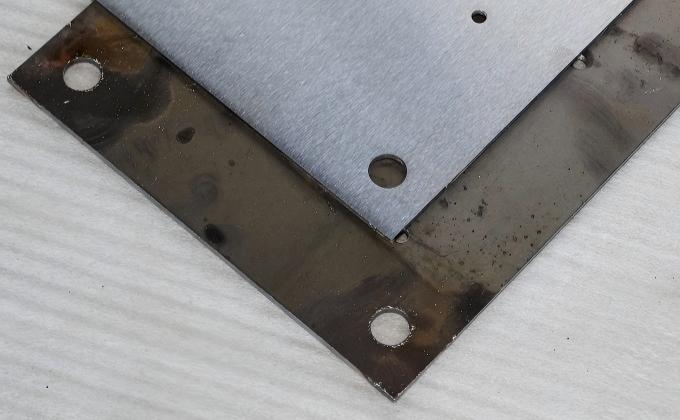
Brushed surfaces are the result of an abrasive finishing process where a fine belt of abrasives is used to grind uniformly on the stainless-steel surface, producing a textured and industrial look.
- Appearance:
Brushed finishes have a highly visible linear grain pattern due to the uniformity of the grind direction, creating a distinct characteristic and adding to the overall industrial aesthetic.
- Light Effect:
Brushed finishes exhibit a high degree of light reflection variability due to the grain direction, which results in an uneven distribution of reflected light across the surface, creating a rugged visual effect.
- Feel:
Brushed finishes have an extremely fine texture with a large number of small micro-grooves that are easily felt by the touch.
- Typical Roughness (Ra):
The average finish roughness for brushed finishes is .5 to 1.5 µm.
The controlled abrasion used in the finishing process of brushed stainless steel improves product performance and helps to hide any minor scratching over time. As a result, brushed finishes are frequently utilized for architectural components, appliances, and heavy-duty industrial products that frequently receive wear and tear.
The Satin Touch
The satin finish is a product of finer abrasive polishing, or of using non-woven abrasives, to eliminate the appearance of any directional grain patterns. Unlike brushed finishes, satin finishes are also refined to produce a smooth uniform surface, which has a non-directional appearance and soft matte sheen.
- Appearance:
Satin finishes exhibit an even soft non-directional appearance with a premium matte look.
- Light Effect:
The light reflected off the surface is diffuse across the surface to minimize the amount of reflected light, resulting in a more elegant finish.
- Feel:
Satin finishes offer a smooth, silky and refined, consistently textured surface.
- Typical Roughness:
0.2 – 0.4 μm
Because they offer a finer structure, satin stainless steel tends to maintain a higher degree of visual sophistication and cleaner appearance than either brushed or polished surfaces.
Therefore, satin finishes are very suitable for applications such as medical equipment, kitchen items, and high-end design products where both hygiene and aesthetics are of significant importance.
| Feature | Brushed Finish (No. 4) | Satin Finish (No. 6) |
| Visual Appearance | Distinct linear grain pattern | Smooth, non-directional matte |
| Light Effect | Uneven, rugged reflection | Diffuse, elegant matte sheen |
| Roughness (Ra) | 0.5 – 1.5 µm | 0.2 – 0.4 µm |
| Tactile Feel | Extremely fine micro-grooves | Smooth, silky, and refined |
| Scratch Concealment | Superior (blends with grain) | Lower (scratches more visible) |
| Hygiene & Cleaning | Standard cleanability | Superior (lower bacterial adhesion) |
2.Performance Comparison: Durability and Hygiene
Scratch Concealment
Stainless steel brushed is better than satin at concealing scratch wear because of the parallel grain structure, which allows wear to be blended into the surface on top of existing scratch wear.
Due to this attribute, brushed stainless steel is ideally suited for applications with a high degree of repeated contact, friction, or mechanical handling. Conversely, satin finishes exhibit a consistently smooth surface texture.
This attribute creates an appealing aesthetic; however, minor scratches become increasingly visible on satin finishes because of their smoothness when exposed to strong lighting or upon close inspection.
Cleanability and Hygiene:
Satin finishes are more hygienically superior than brushed finishes, because they possess a lower surface roughness (Ra value), resulting in fewer points of micro-contamination; therefore, bacterial adhesion is lower, making it easier to clean and sterilize.
The inherently lower surface roughness of satin finishes makes these finishes preferred by industries where sanitary conditions are critical, such as medical, laboratory, and food processing.
Fingerprint Resistance
Brushed finishes do a better job of disguising fingerprints and smudges than satin finishes because the textured grain of brushed finishes creates a visual disruption to the reflection of any oil/milking marks on the surface.
In contrast, satin finishes can show fingerprints much more easily but can be cleaned more quickly and easily than brushed finishes, allowing the restored uniform appearance of the surface to be achieved faster.
3.The Processing Secret: How They Are Made
Mechanical Brushing
Grinded stainless steel is typically manufactured via abrasive belt-grinding systems with a range of #120 – #320 grit. The size of the abrasive determines how deep, sharp, and visible the grain will be on the surface of the material.
Different grades correlate to the final finish of the steel, meaning larger abrasives produce a more pronounced direction within the grain pattern, while smaller abrasives create a more subtle, uniform, smooth grain.
To achieve consistent results on the finished product, consistent pressure and consistent grinding direction must be applied during processing to ensure that the pattern of grains is uniformly aligned.
Finishing with non-Wovens
A satin finish is created using non-woven abrasive wheels or non-woven ultra-fine polishing media.
Unlike producing a brushed finish, this technique does not create a directional line in the surface of the finished product; instead, it will produce an evenly distributed, non-directional, semi-matte surface that provides a smooth, optical appearance.
Achieving the desired level of surface refinement and consistency may require multiple stages of polishing.
Thermal Impact Control
At high speeds, thermal energy generates heat during the grinding and polishing processes. In most cases, excessive thermal energy can cause one or more of the following critical conditions:
- Distortion of the surface or loss of a flat surface
- Discoloration or burn mark
- Inconsistent surface topography
Metals manufactured to exact specifications require proper cooling, consistent feed rates, and optimized pressure settings to ensure that the finished product has high-end surface integrity and visual uniformity. This is especially critical on precision-manufactured instruments.
4. Crucial Step: The Role of Deburring in High-End Finishes
This is the stage where many manufacturers inadvertently lose surface quality, not providing proper edge prep and deburr control before starting the finishing stage.
Poor edge conditioning will also affect the final surface quality, even when using high-quality stainless steel with the highest-quality polishing equipment.
The “Shadowing” Problem
Edge tool burrs and small micro irregularities to the edge of the workpiece disrupt stable, consistent contact on the abrasive belt.
When the belt does not have stable, consistent contact to the workpiece surface due to disruption, the belts vibrate and do not apply consistent pressure during finish, and as a result exhibit:
- Variances of surface topography across a sheet or part.
- Visible shadow lines adjacent to the edge, bend, or transition of a part.
- Variance in the reflection of the satin finish and distortion of the light pattern.
- A reduction in visual quality across the entire surface of the part, especially under a directional light source.
These issues are particularly problematic for satin finish, as a satin finish has a low-textured finish and therefore any minor disruption in the surface will be easily visible.
Edge Rounding for Consistency
Proper edge rounding and control of radius formation are necessary to achieve a professional-grade finish.
By preparing all edges in an equal manner, the process of abrading the workpiece now has a much higher degree of stability. As a result, light will continuously flow across a flat surface without interruption.
This results in:
- Enhanced optical continuity across the flat and edge regions.
- Increased surface uniformity and visual balance.
- Improved consistency of reflection under different angles of exposure.
- The perceived value of the product and how well it finishes.
Edge geometry plays just as important a role as surface polishing when it comes to high-end stainless-steel fabrication.
Automation Advantage
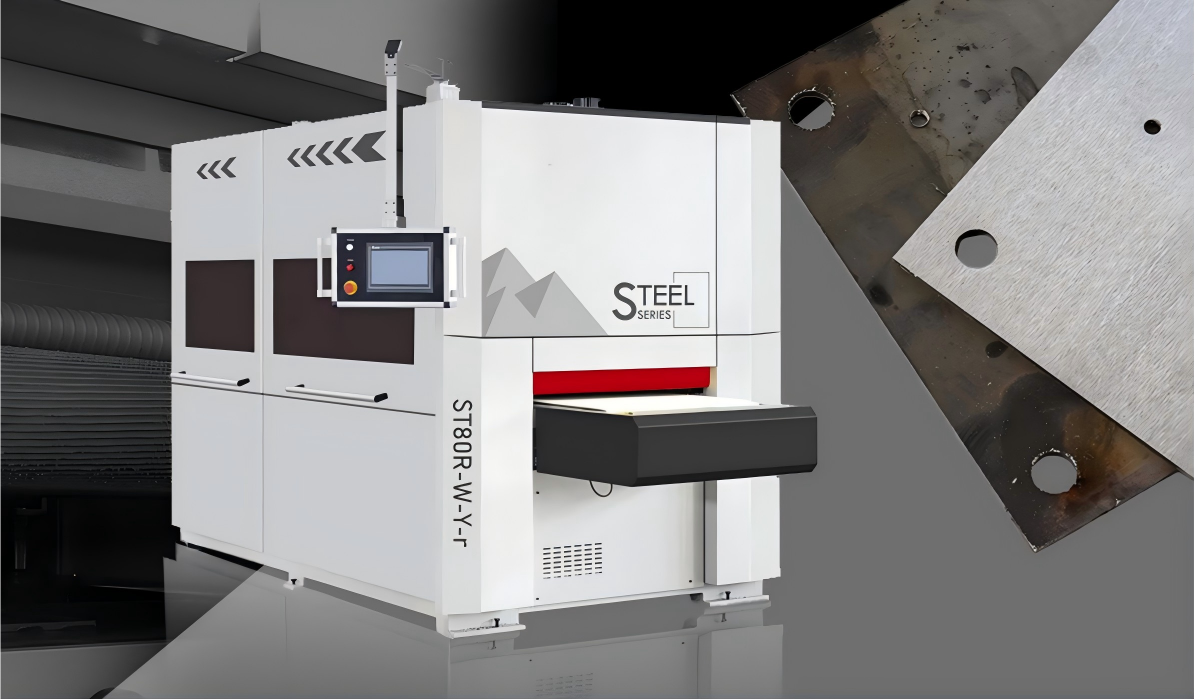
As an industry leader in surface finishing technologies, Armpre supplies customers with many varieties of advanced all-in-one deburring and brushing machines developed for today’s modern manufacturing requirements, to help make your production lines operate more smoothly while achieving consistent quality control.
- Elimination of burrs before starting finishing processes
- Integration of deburring and edge treatment with surface finishingprocesses in one automated operation
- Reduced human handling of parts, which decreases the possibility of scratches occurring on the part during handling
- Increase production efficiencies, while achieving the same finished quality due to the repeatability of automated processes
These systems provide manufacturers with the ability to produce satin and brushed finishes that are perfect in terms of surface profile or topography, consistency, and with no visible defects for both moderate and high precision applications.
5. Application Guide: Choosing the Right Finish by Industry
The difference between choosing a satin finish and a brushed finish for stainless steel is about engineering, not just design; it is driven by the functionality, durability, and hygiene requirements, as well as the visual expectations across multiple industries.
Kitchenware & Appliances
In kitchen and consumer appliance designs today, satin finishes are the preferred choice for both their aesthetic appeal and the practical aspects of the finish.
The satin finish will provide:
- A premium modern appearance
- Easy cleaning/maintenance
- Food safe/Hygienic surface characteristics
- Smooth/refined touch feel
In addition to being attractive to the touch, the uniform semi-matte satin finish will help to reduce glare in kitchens and enhance overall product appeal.
Architectural Hardware
Brushed stainless steel is by far the most widely used of the two finishes in architectural and structural applications where durability and wear resistance are of utmost importance. Architectural hardware applications for brushed finishes include, but are not limited to:
- Elevator cabs/panels
- Handrails/stair railings
- Door frames/architectural fixtures
The use of brushed stainless steel provides a consistent look before and after extended periods of heavy use due to their ability to resist visible wear, scratches, and fingerprints.
Precision Instruments
In environments where medical devices, laboratories, or precision engineering are taking place, surface control is highly regulated and defined. As a result, satin stainless-steel finishes are the typical requirement due to their excellent surface refinement properties.
Precision applications demand:
- Ultra-low surface roughness for contamination control
- Highly uniform surface topography for precision performance
- Strict/controlled edge preparation
Satin finishes are critical for these applications because they enable cleanroom practices, sterilization processes, and high-performance functional dependency, where even small imperfections can affect operation.
| Industry Sector | Recommended Finish | Primary Selection Driver |
| Kitchenware & Appliances | Satin | Aesthetic appeal and food safety |
| Architectural Hardware | Brushed | Durability and resistance to heavy wear |
| Precision Instruments | Satin | Contamination control and sterilization |
| Heavy-Duty Industrial | Brushed | Hiding minor scratches over time |
| High-End Design | Satin | Visual sophistication and premium feel |
Conclusion:
From the edgy industrial look of brushed stainless steel to the luxury appeal of satin finishes, there’s a common rule:
“Surface perfection starts with edge perfection”
After precise deburring and proper edge prep, advanced finishing systems will not produce consistent, high-quality results. The origin of defects such as shadowing, inconsistency in texture, and inconsistency in reflection is typically attributed to the edge phase (not the polishing phase).
Explore advanced automated solutions at armpre.com designed for eliminating these problems at their source. Combining deburring and surface finishing technology into one system allows your manufacturer to achieve polished satin & brushed finishes consistently, efficiently, and in control.
Achieve true precision engineering for your stainless-steel production because high-end finishes start long before they are polished.
Don’t know which one to choose yet? You can compare and see the machine customization of ARMPRE
👉 Just Have A See: High-Precision Wide Belt Sanders for Industrial Finishing: Your Top Supplier
FAQ
Q1: What is the most obvious difference between satin and brushed finishes?
▼
The key difference is surface finish and grain orientation. Brushed finishes are directional, being produced by abrasive belt grinding, whereas satin finishes are non-directional, smooth and uniform in appearance, and have a softer look.
Q2: Which surface is easier to clean?
▼
A satin finish will generally provide a higher level of cleanliness than a brushed finish because, with a lower surface roughness, the satin will tend to retain more dirt, oil, and residue particles.
Q3: Which hides scratches better?
▼
A brushed finish will generally provide more effective concealment of scratches than a satin finish because the linear directionality associated with a brushed finish will generally help mask areas of wear, while blending them into the existing surface texture as opposed to highlighting them.
Q4: Is satin more expensive?
▼
Yes, the satin finish is usually more expensive due to the use of finer abrasives, additional polishing steps, and more stringent process controls required to create a completely uniform, high-quality surface without any visible grain characteristics.
Q5: Why do shadow marks appear near edges?
▼
Shadow marks are usually the result of improper deburring (e.g., having too much or too little pressure applied to the edge) and/or sharp edges that do not maintain stable contact between the surface and the abrasive tool.
Because of this, an inconsistent amount of polishing pressure will occur, resulting in a difference in surface appearance (especially in satin finish) from other areas on the same piece, resulting in shadow marks near the edges.
Q6: Do these finishes affect corrosion resistance?
▼
The surface finish does not influence the corrosion resistance of a material; rather, it is determined by its stainless-steel grade/ composition and not by whether it is a brushed vs. satin surface finish.
However, by creating a surface that is smooth surface, one can make the surface easier to clean, thus indirectly preventing corrosion.
Q7: Can brushed be converted to satin?
▼
Yes; however, this process requires using smaller grit abrasives or non-woven polishing systems to re-process the surface and also to prepare the edges and to deburr the edges, so the finish is uniform in appearance.
Q8: What are the No. 4 vs No. 6 finishes?
▼
No. 4 Finish = A directional grain finish, medium in terms of roughness
No. 6 Finish = Satin, smoother, finer, and more uniform with less texture
Most industrial specifications will define the different levels of surface refinement by referencing these standards.
Ready to elevate your production quality?
Investing in a high-quality sanding machine is a decision that impacts your manufacturing precision and efficiency for the next 5 to 10 years. Don’t settle for instability. Choose a reliable partner to secure your competitive edge in surface finishing.

About Smaria
I am a technical specialist at ARMPRE, dedicated to mastering the art of industrial surface finishing. I focus on bridging the gap between sophisticated automation and real-world manufacturing, ensuring every workpiece achieves consistent edge perfection and a flawless finish that maximizes your long-term ROI.