
Selecting the right sheet metal deburring process often result debate between wet and dry machinery. Laser-cut dross, punch burrs, and sharp edges cause assembly failures, part rejection, and safety hazards on the shop floor. Making the wrong equipment choice can create severe dust hazards, corrosion problems, or coating failures. Understanding core mechanical differences helps you choose properly in wet vs dry deburring.
Sheet metal deburring relies on dry abrasive belts or wet coolant-assisted grinding, but neither method is universally superior. Dry deburring uses abrasive belts and rotary brushes with localized dust extraction, ideal for standard steel. Wet deburring adds filtered liquid media to capture combustible fines, cool thin parts, and prevent thermal distortion, which benefits mixed metals and heat-sensitive precision parts.1
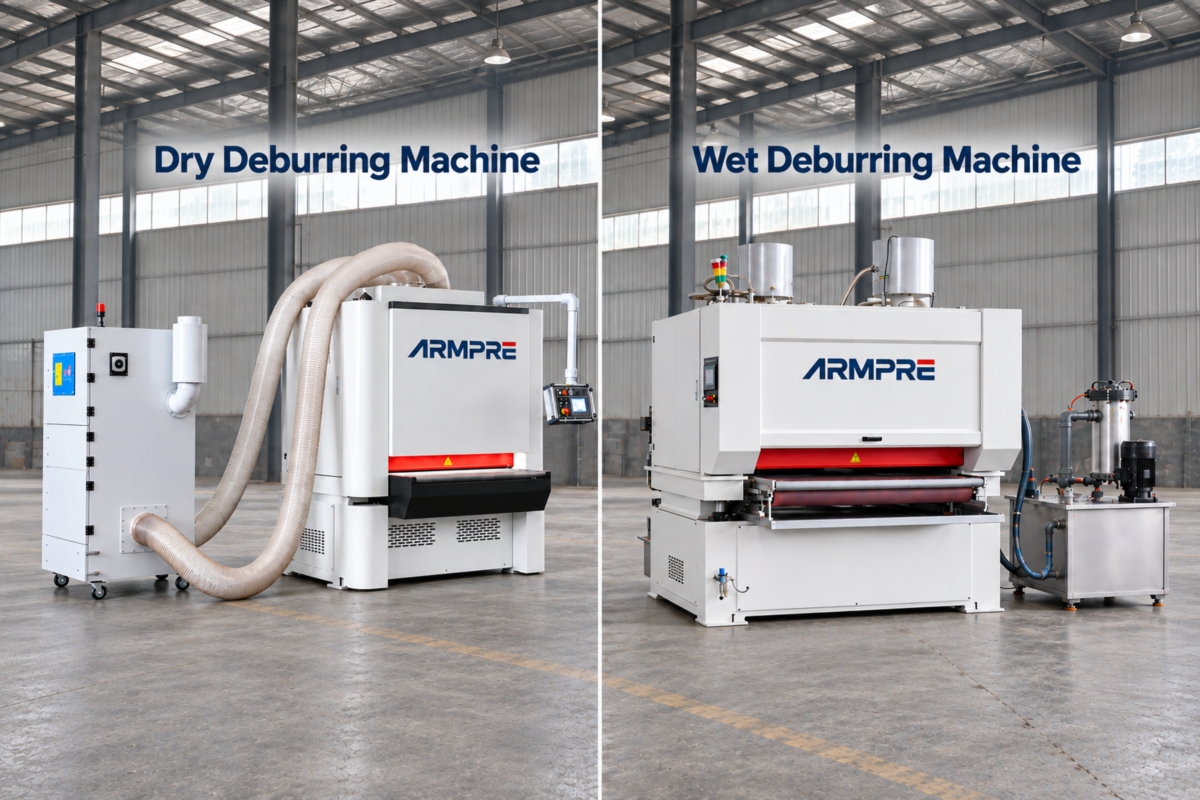
In my work reviewing technical requirements with plant engineers, this decision rarely comes down to machine price alone. Material behavior, plant safety protocols, and downstream finishing requirements dictate the path forward. Let us examine the mechanics, material chemistry, and facility demands that define each deburring method.
What is the mechanical difference in sheet metal deburring systems?
Fabricators often assume that liquid media simply washes away dirt during edge processing. When burr removal leaves heavy slag, warped edges, or scratched cosmetic surfaces, production schedules suffer immediately. Selecting the wrong mechanical principle leads to rapid belt wear and uneven edge rounding across your batch runs.
The core difference lies in how energy and particulate waste are managed at the contact point. Dry systems rely entirely on directly belt contact, and dry air extraction to clear debris. Wet systems incorporate a recirculated liquid coolant curtain that dampens grinding friction, lubricates the abrasive grain, and flushes particulate down to a filtration unit.
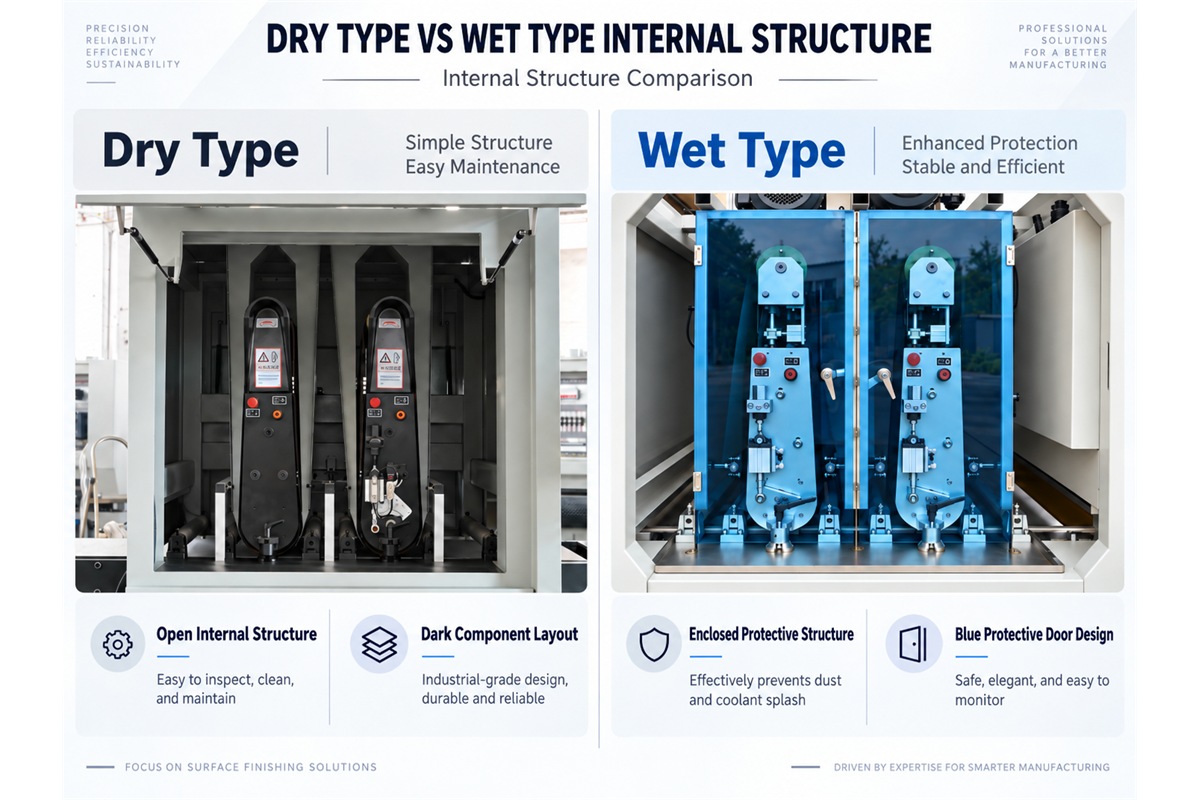
Heat Dissipation and Part Geometry
Grinding creates friction. In dry deburring, that frictional heat transfers directly into the workpiece and the abrasive media. For thick structural steel plates, this heat absorption is rarely an issue. However, thin sheet metal parts—such as electronic chassis covers or precision heat-sink plates below 1.5 mm thickness—can warp under thermal stress.
Wet deburring floods the abrasive contact zone with water-soluble oil or synthetic grinding fluid. This continuous liquid stream absorbs thermal energy instantly. The workpiece remains cool to the touch as it exits the machine. As a result, narrow bridges, intricate cutouts, and tight geometric tolerances retain their dimensional integrity without heat-induced bow or twist.
Abrasive Belt Behavior and Grain Loading
The presence of fluid alters how abrasive minerals cut metal:
- Dry Abrasive Action: Dry belts provide high initial aggression. The mineral grain cuts sharply into burrs, but soft metals like aluminum can smear across the abrasive cloth. This phenomenon, known as belt loading, dulls the belt prematurely and increases surface roughness.
- Wet Abrasive Action: The liquid media continuously clears swarf from between the abrasive grains. This washing action keeps the cutting tips exposed. Consequently, abrasive belts in wet systems often experience more even wear patterns across their working lifespan.
- Edge Rounding Consistency: Both dry brush units and wet rotary carousels can achieve edge rounding radii from 0.1 mm to over 2.0 mm. However, wet systems maintain a more uniform contact temperature, which prevents sticky micro-burrs from re-welding to the part perimeter.
Operating Differences: Dry vs Wet Deburring
Primary Cooling Medium
- Dry: Ambient plant air / forced exhaust
- Wet: Recirculated water-soluble coolant
Thermal Distortion Risk
- Dry: Moderate to high on thin sheet (less than 1.5 mm)
- Wet: Minimal; process remains near ambient
Belt Loading Tendency
- Dry: Higher on ductile materials (aluminum, copper)
- Wet: Low; fluid continuously clears abrasive grains
Secondary Part Cleaning
- Dry: Air knife / vacuum brush (dry dust removal)
- Wet: High-pressure wash, squeegee, hot-air dry
Machine Footprint
- Dry: Compact (excluding external dust collector)
- Wet: Larger (requires fluid tank, pumps, and dryers)
How do material properties dictate sheet metal deburring methods?
Processing mixed metals on a single deburring machine can create catastrophic plant hazards or severe cosmetic defects. Operators who switch between carbon steel and aluminum without proper process controls risk fire, explosive reactions, or cross-contamination. Matching your alloy mix to the process mechanics prevents costly factory disruptions.
Material properties dictate deburring selection based on dust flammability, galvanic corrosion, and oxide buildup. Dry systems handle mild steel and stainless steel cleanly when dedicated extraction is installed. Wet systems are often selected when processing aluminum, titanium, or mixed alloys, because water immersion immediately neutralizes combustible dust risks and prevents atmospheric particulate suspension.
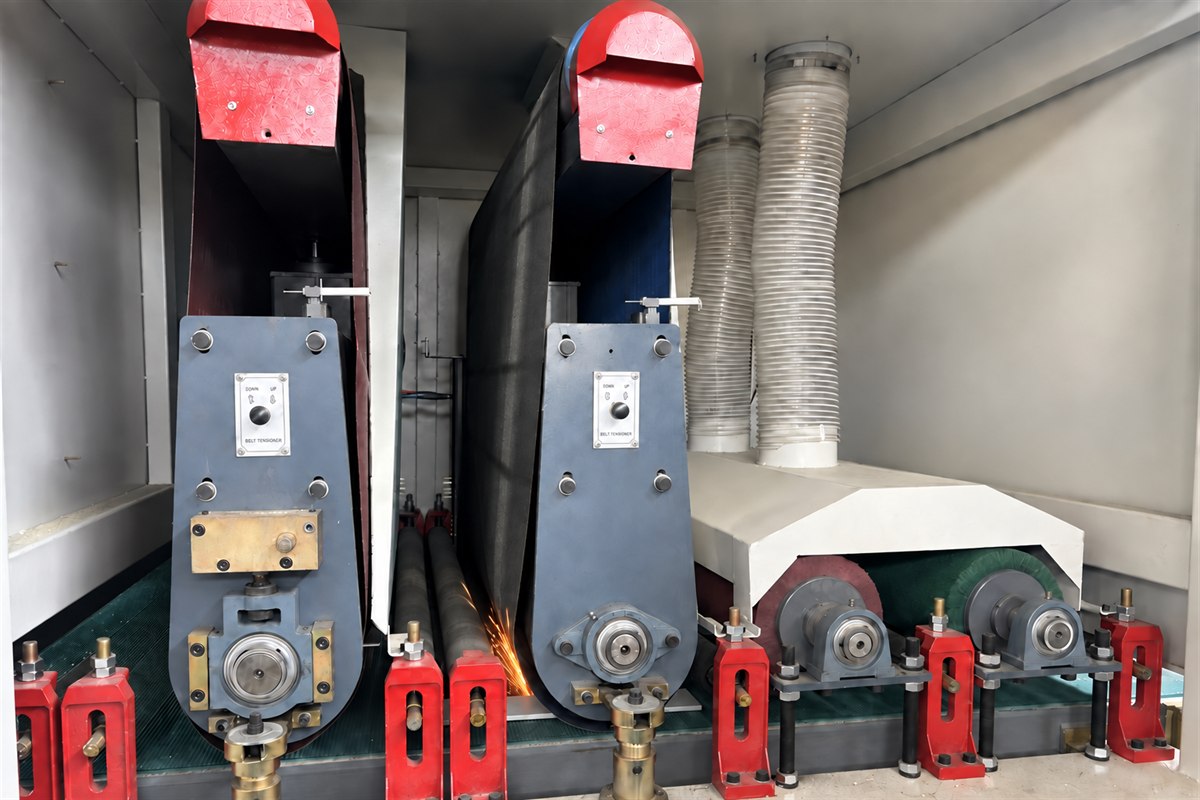
Combustible Dust and Explosion Risks
Fine metal dust presents a severe safety hazard in sheet metal fabrication. When you grind aluminum, titanium, or magnesium, the generated fines have a high surface-area-to-mass ratio. In a dry dust collector, an ignition spark from carbon steel grinding can ignite suspended aluminum powder, leading to rapid deflagration.
Safety Precaution: Never mix carbon steel grinding dust with aluminum dust in a standard dry extraction system without professional safety evaluation. The combination can initiate an exothermic thermite reaction.
Wet deburring machines address this specific danger at the point of contact. The liquid stream encapsulates the metal fines immediately as they shear away from the part. The slurry drops into a collection tank, preventing combustible particles from floating through the air or entering ductwork. However, wet aluminum grinding introduces another chemical reality: aluminum reacts with water over time to release hydrogen gas. Therefore, wet machines processing aluminum must feature ventilated hood designs to prevent hydrogen pocketing. Qualified safety professionals must verify these installations against applicable fire and electrical codes.
Galvanic Cross-Contamination and Surface Corrosion
When fabricators supply stainless steel chassis for cleanroom, medical, or telecommunication uses, surface purity is critical:
- Carbon Contamination: If carbon steel slag embeds into a stainless steel surface during dry tumbling or brushing, the stainless material will exhibit localized rust spots in service.
- Fluid Residues: While wet deburring prevents cross-contamination by washing particles away, it introduces water and chemical additives to the part. If you run raw cold-rolled steel through a wet machine, the parts will flash rust within minutes unless the coolant contains rust inhibitors and the line includes a dedicated drying stage.
- Galvanized Sheet Limitations: Processing galvanized sheet metal on a wet line requires careful fluid monitoring. Highly alkaline or acidic coolants can strip the protective zinc coating, leaving the cut edge exposed to premature oxidation.
What facility infrastructure supports sheet metal deburring equipment?
Many fabrication plants purchase high-throughput deburring machinery only to discover their facility utilities cannot support reliable operation. Inadequate utility planning causes unexpected installation delays, contaminated effluent discharges, and electrical code compliance failures. Evaluating physical utility connections early ensures a clean equipment installation.
Dry systems require certified dust collectors, explosion-isolation venting, and high-volume ductwork designed to prevent dust settling. Wet systems require continuous fresh water make-up, closed-loop fluid filtration tanks, wastewater treatment compliance, and inline drying conveyors. The choice depends on whether your plant better accommodates pneumatic ducting or liquid recycling infrastructure.
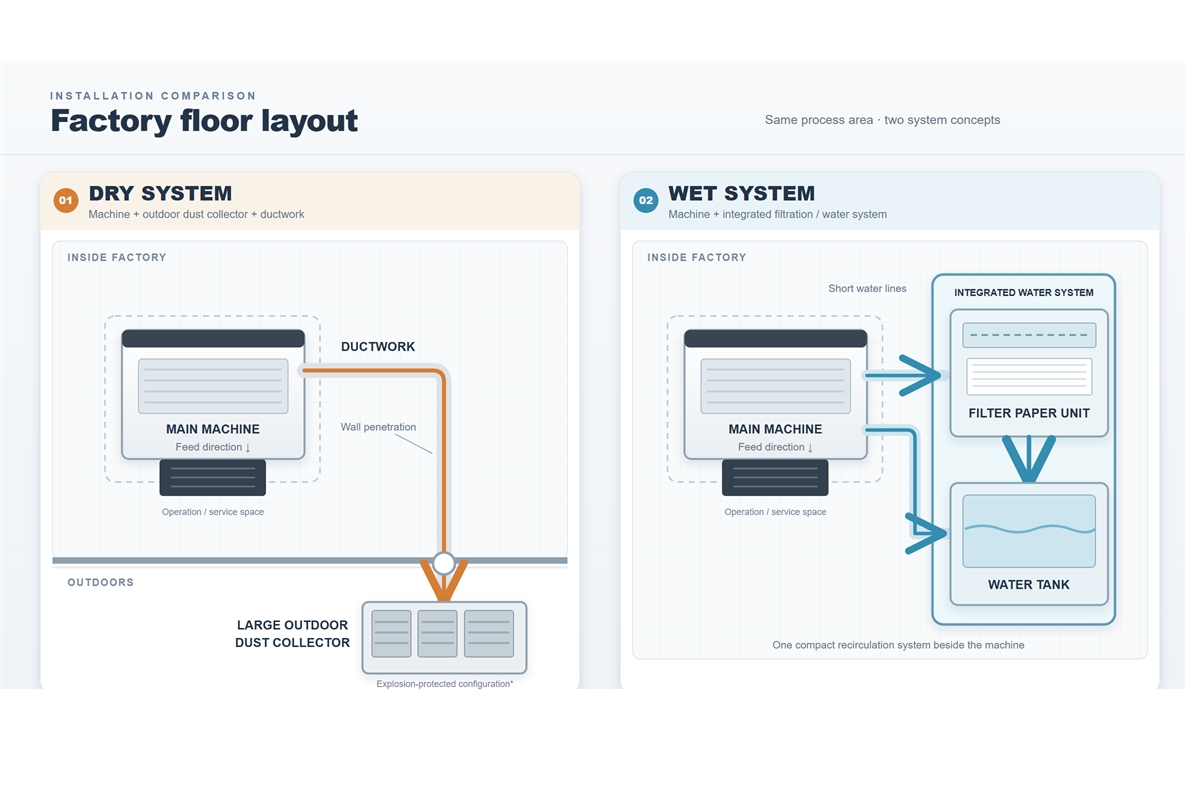
Air Quality, Ductwork, and Dry Dust Collection
A dry deburring machine is only as effective as the dust collector pulling air from its grinding heads. The system requires balanced airflow to capture heavy grinding dross without sucking large parts into the ducting.
- Duct Velocity: Air velocity inside dry extraction ducts must remain high—typically above 20 to 25 meters per second—to prevent heavy metal fines from settling inside horizontal duct runs.
- Explosion Venting: If the machine processes flammable metals dry, the collector must reside outdoors or incorporate flameless explosion venting, backdraft isolation valves, and spark detection systems.2
- Make-up Air: High-volume dust collectors exhaust significant volumes of plant air. Facilities in cold or hot climates must account for heated or cooled replacement air, which impacts operational energy costs.
Water Management, Sludge Separation, and Rust Prevention
A wet deburring machine functions like a specialized machining center with its own coolant ecosystem. You must treat fluid maintenance as a daily operational task rather than an afterthought:
- Sludge Filtration: Wet machines use continuous paper band filters, magnetic separators, or cyclonic centrifuges to remove metal grit from the grinding fluid. If filtration fails, the pump recirculates abrasive grit, which scratches cosmetic part faces.
- Concentration Control: Operators must monitor coolant concentration using a refractometer. If the oil-to-water ratio drops too low, parts flash rust inside the machine. If the ratio climbs too high, parts exit covered in greasy residues that cause powder-coat peeling.
- Biological Management: Stagnant water breeds bacteria and fungi. Plants that run intermittent shifts must circulate fluid periodically and use biocides to avoid foul odors and skin irritation among operators.
Facility Requirements: Dry vs Wet Deburring
Power Requirements
- Dry: Machine drive motors + high-kW dust collector blower
- Wet: Machine drive motors + liquid pumps + drying blowers/heaters
Piping & Utilities
- Dry: Compressed air (for pulse-jet filter cleaning)
- Wet: Fresh water supply, drainage plumbing, compressed air knives
Environmental Disposal
- Dry: Dry metal cake disposal via standard metal scrap bins
- Wet: Hazardous liquid waste disposal or specialized coolant skimming
Footprint Demands
- Dry: Vertical clearance for ducting and outdoor collector yard
- Wet: Horizontal floor space for coolant tanks, filter beds, and dryers
How does edge preparation impact downstream assembly?
Deburring is not the final step in sheet metal manufacturing; it sets the baseline for every subsequent operation. Residual coolant residues, abrasive grit, or inconsistent edge radiusing cause powder coat blistering, weld porosity, and misaligned threaded fasteners. Controlling edge quality upstream safeguards downstream production reliability.
Edge preparation dictates how paints adhere, how laser welds seal, and how precision fasteners seat. Dry deburring leaves surfaces ready for immediate welding or dry tapping, avoiding trapped liquid inside small crevices. Wet deburring produces clean, dust-free surfaces with smooth edge radii, but requires complete drying to prevent corrosion before powder coating or secondary machining.
Coating Adhesion and Surface Cleanliness
Paint, powder coating, and e-coating demand chemical cleanliness and mechanical anchoring. Liquid paint naturally pulls back from a razor-sharp 90-degree metal edge due to surface tension. This phenomenon, known as edge thinning, leaves parts vulnerable to corrosion.
- Edge Radiusing: Both wet and dry machines can break sharp corners into controlled radii (R0.5 mm to R2.0 mm). This radius allows uniform coating thickness around the entire perimeter.
- Surface Residues: Dry deburring leaves fine static dust clinging to the sheet surface. If parts move directly from a dry deburring machine to powder coating without an automated wash stage, the trapped dust causes surface pinholes and blisters.
- Fluid Trapping: Wet deburring eliminates loose dust, but liquid can seep into hemmed edges, spot-welded joints, and perforated patterns. If parts are not completely dried, trapped moisture boils inside the powder coating cure oven, popping paint off the substrate.
Precision Tapping and Fastener Insertion
Downstream mechanical joining demands close attention to edge and hole conditions. In my experience evaluating technical challenges for precision sheet-metal enclosures and liquid-cooled cold plates, pre-drilled or punched holes must remain free from defects before secondary operations begin:
- Hole Edge Uniformity: Deburring belts and rotary brushes must remove the breakthrough burr on pierced holes without creating a heavy secondary bevel. If a brush rounds a hole edge too aggressively, the available thread engagement depth drops significantly in thin sheet stock.
- Sludge Ingress in Secondary Threading: When parts move from deburring to precision tapping machinery—such as flexible-arm servo tapping units or multi-spindle drilling systems—hole cleanliness is paramount. Wet deburring can wash metal swarf and coolant sludge straight into small pre-drilled pilot holes (such as M2 to M4 threads). If this sludge dries inside a blind hole, the tap can bottom out prematurely, snapping the tool.
- Thread Sealing in Liquid Cooling: In copper or aluminum liquid cold plates, thread consistency ensures leak-tight O-ring sealing. Wet deburring prevents the thermal warping that ruins plate flatness. However, fabricators must ensure the fluid used does not react with the aluminum alloy, ensuring clean, undamaged internal pilot surfaces for precision tapping.
Frequently Asked Questions
Can you deburr aluminum on a dry sheet metal deburring machine?
Yes, but only if the machine connects to a wet dust collector or an extraction system engineered specifically for combustible dust. Operators must clean ductwork regularly to prevent dust accumulation. Never switch between carbon steel and aluminum on a dry machine without completely cleaning the extraction paths.
Does wet sheet metal deburring cause parts to rust?
Wet deburring will cause carbon steel parts to rust if the fluid lacks adequate rust-inhibiting additives or if the drying process is incomplete. Maintaining correct coolant concentration and utilizing automated hot-air drying stages prevents flash rust before parts move into inventory or coating lines.
Which process offers longer abrasive belt life?
Wet deburring generally provides longer abrasive belt life when working with ductile, soft metals like aluminum and copper. The recirculated liquid continuously cleans swarf from the abrasive grain. In dry deburring of soft materials, belts load up with smeared metal faster, requiring more frequent belt replacements.
How do I know if wet deburring is necessary for laser-cut parts?
Wet deburring is recommended if you process mixed metals prone to dust combustion, manufacture thin sheet metal subject to heat warping, or produce parts requiring oil-free, dustless surfaces for cleanroom assembly. If you process solely heavy structural carbon steel, dry deburring is typically simpler to operate.
Conclusion
Selecting the right approach to sheet metal deburring requires balancing material characteristics, combustible dust hazards, and facility infrastructure. Dry systems deliver straightforward operations and lower initial facility complexity for standard steel production. Wet systems provide exceptional thermal stability, superior particulate capture for reactive metals like aluminum, and refined edge finishes for tight-tolerance enclosures. Neither route wins by default; your part drawings, alloy mix, and plant capabilities should drive the procurement decision.
If your facility manufactures precision sheet-metal enclosures or liquid cooling assemblies, achieving burr-free parts is only half the battle. Secondary operations like hole tapping and threaded fastening require absolute dimensional accuracy and zero chip entrapment. Consult with an equipment specialist to audit your production sequence from edge deburring through to automated precision tapping.
➡️ Request a Free Application Test Cut Today Send us 3-5 of your toughest laser-cut or punched parts. We will process them through our systems and return them with a report, exact cycle-time metrics, and abrasive consumable cost breakdowns.
"Wet Deburring Machine for Safe Metal Finishing & Surface ...", https://armpre.com/wet-deburring-machine/. Technical articles on deburring processes report that wet systems minimize heat buildup and capture metal fines, which is advantageous when processing aluminum, titanium, or thin-gauge parts alongside steel. Evidence role: general_support; source type: research. Supports: Engineering sources indicate that wet deburring reduces thermal distortion in thin parts and controls combustible dust from reactive metals, making it suitable for mixed-material runs.. Scope note: The source may not provide direct comparative data on mixed-metal production efficiency. ↩
"Citation 314245473/01001 | Occupational Safety and ...", https://www.osha.gov/ords/imis/generalsearch.citation_detail?id=314245473&cit_id=01001. NFPA 484 requires that dust collectors for combustible metals be located outdoors or equipped with explosion venting, isolation valves, and spark detection systems to mitigate deflagration risks. Evidence role: statistic; source type: government. Supports: NFPA 484 and OSHA regulations mandate explosion protection for dust collectors handling combustible metal dusts.. Scope note: The source may not list all possible compliance options. ↩