
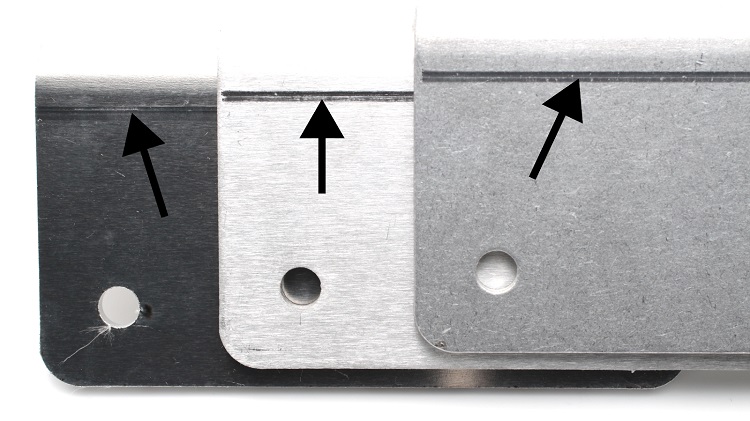
In modern metal processing, sharp edges, burrs, and heavy slag can easily threaten your product quality, workplace safety, and coating longevity. Mechanical deburring gives you standardized, repeatable, and scalable surface finishing. Whether you are looking for solutions in sheet metal, structural plates, or precision components processing, this guide breaks down mechanical deburring and finishing to help you make the right choice.
1. Why Do Burrs Form and What Are Their Hidden Risks?
Burrs are formed during metal processing like cutting, stamping, or machining operations.
Common Burr Formation
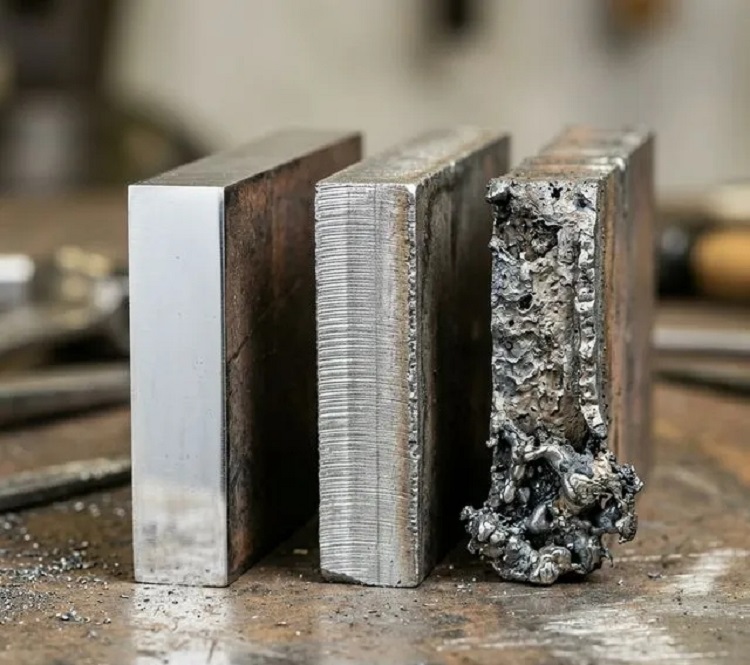
Thermal Cutting (Laser, Plasma, Flame)
During metal thermal cutting, the laser, plasma, or flame heats metal and leaves hardened dross or slag on the workpiece bottom and edge.
Mechanical Punching & Shearing
Blade wear or improper clearance are easy to cause metal edges to stretch and roll over.
Milling & Machining
During metal milling and machining, the cutting tools push micro-burrs out at the exit paths.
Hidden Risks of Burrs
Operator & Assembly Safety
Sharp burrs and edges would cause injuries during labor, handling, and assembly.
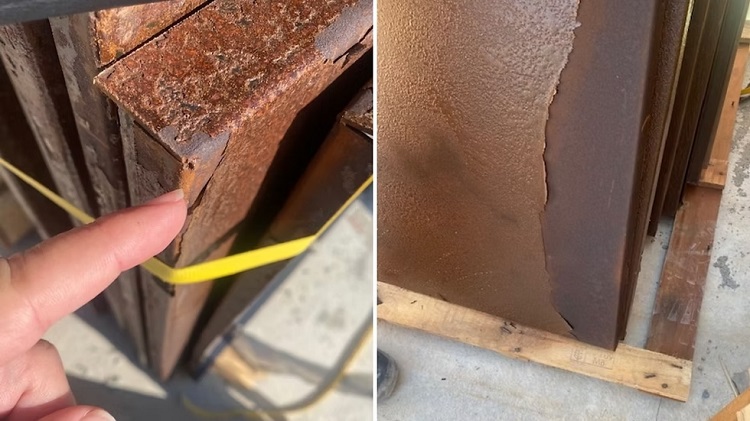
Coating & Paint Failure
Due to surface tension, the sharp 90° corners will pull away paint and powder coatings. In the end, it will lead to metal rusting and peeling.
Assembly & Fitment Issues
Micro-burrs are easy to cause misalignment in precision assemblies.
Internal Component Hazard
During operation, loose burrs can dislodge inside machinery and clog hydraulic valves, ultimately damaging your moving parts.
2. What Is Mechanical Deburring and How Does It Work?
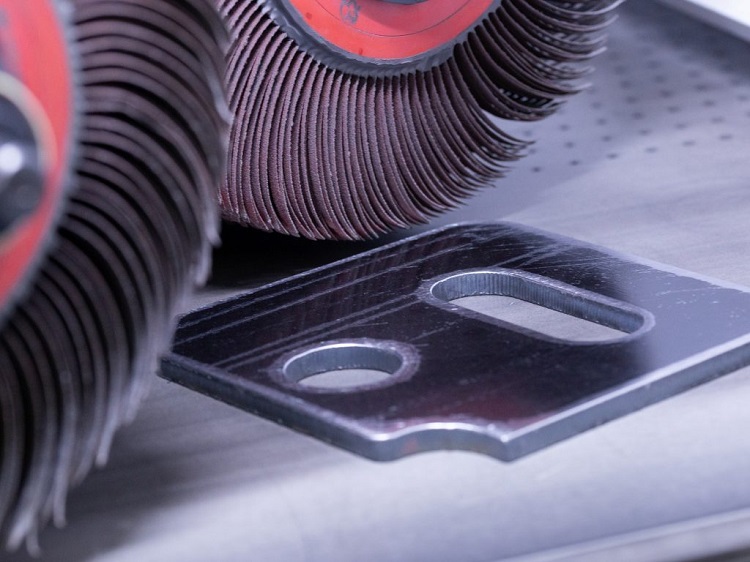
Mechanical deburring is a type of physical metalworking for burr removal with mechanical forces, such as grinding, cutting, shearing, or brushing. They are widely applied to metal workpieces with burrs caused by cutting, stamping, or machining operations.
Unlike chemical etching or high-heat vaporization, mechanical deburring physically finishes metal workpieces by mechanical forces and actions, including:
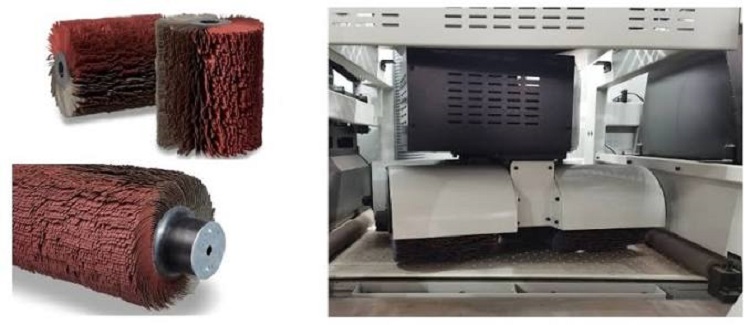
Abrasive Grinding
With high-speed abrasive belts or grinding wheels, it removes heavy laser dross, plasma slag, and raised surface burrs in a single pass.
Rotary Brushing & Sweeping
Designed with flexible brushes loaded with abrasive grains, the deburring system can sweep away edges, holes, and inner cutouts with a smooth 360° edge rounding radius.
Indexable Shear Cutting
Equipped with rigid cutter heads, it can give solid bars and tubes high-torque facing and chamfering to clear away heavy edge flash.
3. Manual vs. Automated Mechanical Deburring
If you have a busy workshop with skilled workers, it will not bring you high output and good quality. Here is how manual grinding compares with automated mechanical deburring:
| Manual Hand Grinding | Automated Mechanical Deburring | |
| Throughput & Speed | Slow & Labor-Intensive: Single part processed at a time (minutes per part). | Ultra-Fast: Continuous conveyor feed (meters per minute; hundreds of parts/hour). |
| Consistency & Quality | Inconsistent: Dependent on operator fatigue; prone to gouging or uneven edges. | 100% Repeatable: Uniform 360° edge radius and flat surface finish across massive batches. |
| Labor & Operating Cost | High OPEX: Requires skilled manual operators; high hourly wage overhead. | Low OPEX: Single operator loads/unloads conveyor; minimal consumable wear per part. |
| Shop Floor Safety | High Risk: High rate of hand-arm vibration syndrome (HAVS), flying sparks, and cut injuries. | Enclosed & Safe: Dust extraction, safety enclosures, and zero direct operator tool contact. |
| Coating Readiness | Variable edge profiles; frequent powder coating flaking and salt-spray test failures. | Passes strict ISO 13715 and ASTM B117 salt spray corrosion standards consistently. |
The ROI Reality: Though automatic deburring machines require an initial capital investment (CAPEX), you can achieve complete equipment payback within 6 to 12 months with increased laser cutting throughput.
4. What Are the Main Types of Mechanical Deburring Machines?
Now that you have learned about how automated finishing benefits your ROI, which machine is actually right for your unique production line? Before figuring out this question, here is a breakdown of the four mechanical deburring machines for you.
Abrasive Belt & Rotary Brush Machines
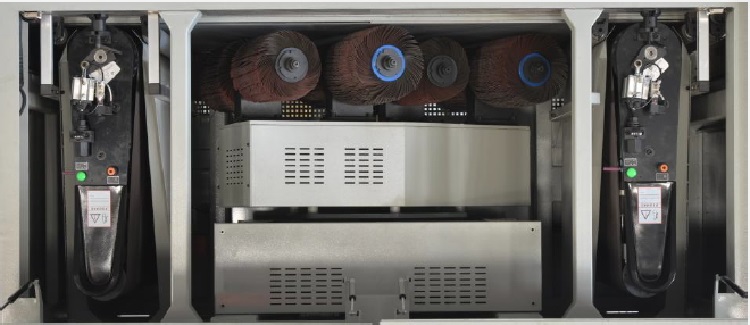
Combined with abrasive belts and rotary brush systems, the rotary brush deburring machine can handle laser dross, plasma slag, or sharp punched edges on flat metal sheets in a single pass.
How It Works: Load your workpieces along a high-friction vacuum conveyor bed. Then the heavy abrasive belts remove the top burrs and heavy bottom slag. After the first stage, the rotary brushes sweep across outer contours and internal cutouts with a uniform 360° edge rounding.
Best For: Sheet metal fabricators, laser cutting centers, and stamping plants processing flat plates.
Heavy-Duty Bar & Pipe Chamfering Systems
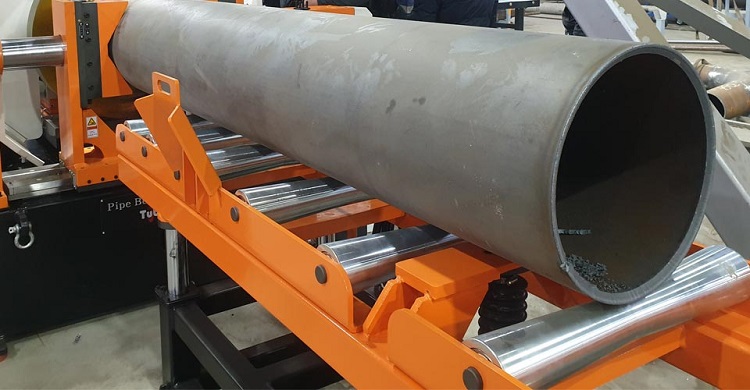
Delivering micron-level squareness and chatter-free chamfered edges, the pipe chamfering machine can ensure you get smooth bar ends with uniform edge rounding.
How It Works: Locking your solid bar securely in place, the pipe chamfering system performs flat facing and chamfering at the same time.
Best For: High-volume processing of raw saw-cut solid bars, hexagonal rods, and heavy tubes.
Vibratory & Tumbling Barrel Mass Finishing
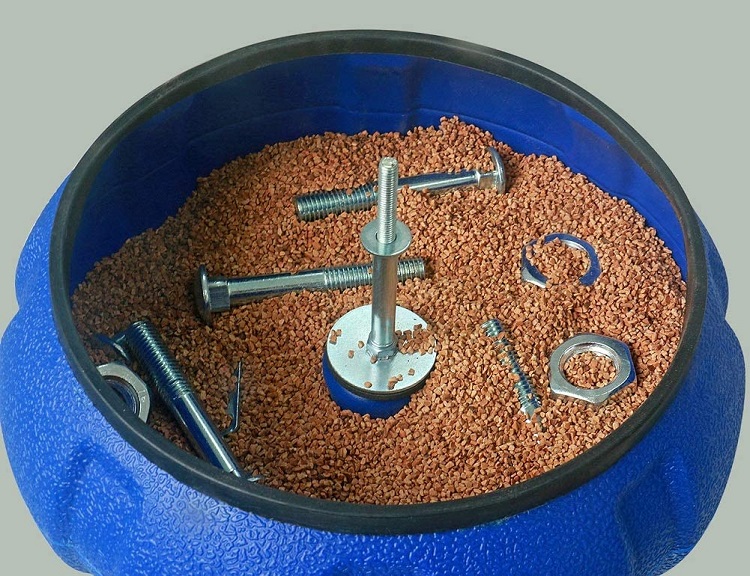
Specifically designed for high volumes of tiny components, vibratory mass finishing can ensure every part receives a fine finish.
How It Works: Tumbled inside a vibrating tub or rotating barrel with specialized abrasive media like ceramic, plastic, or steel shapes, small components will be evenly finished in bulk.
Best For: Mass finishing of small hardware, stampings, forged fasteners, and small cast fittings.
CNC Spindle & Robotic Deburring Tools
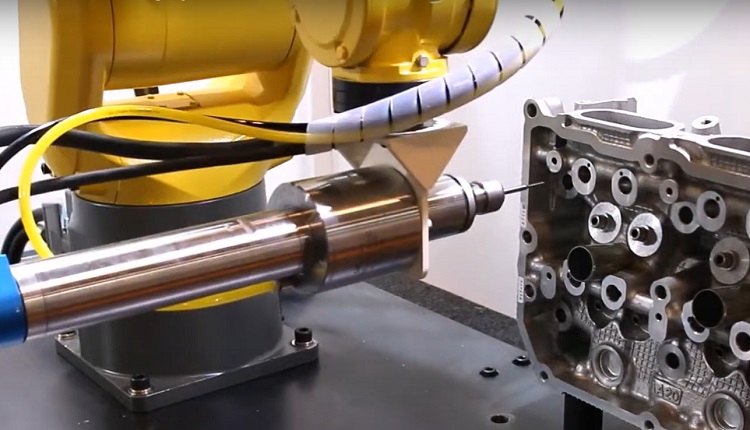
Engineered for parts with internal oil holes, 3D spatial curves, or deep cavities, robotic deburring can reach your holes and remove burrs.
How It Works: Equipped with compliant burr-removal heads and wire brushes, the robotic arms or CNC milling spindles can deburr complex spatial geometries.
Best For: Automotive engine blocks, aerospace castings, and complex 3D machined housings.
5. How Do Multi-Stage Tools Work in Mechanical Deburring?
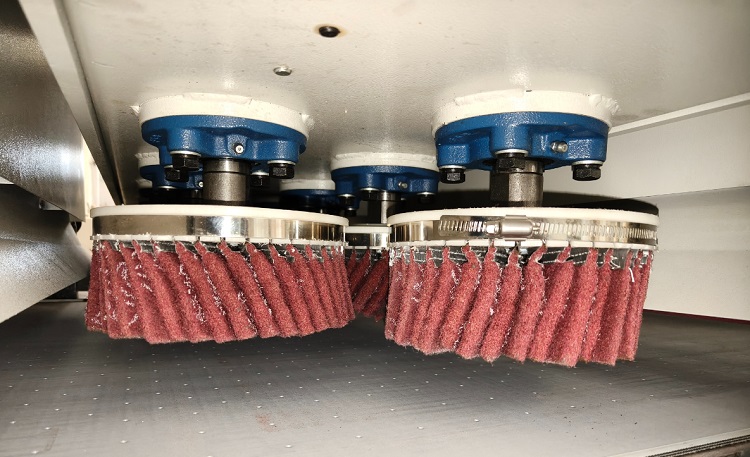
A high-performance deburring machine requires the perfect cooperation of abrasive media and tools. To achieve a target finish without wasting abrasive budgets, there are three tool types for your task.
Abrasive Belts
Tackling flat-surface burrs, heavy laser dross, and plasma slag, abrasive belts are your first line of defense. They are good at handling carbon steel, stainless steel, and tough alloy steels.
Rotary Disc Brushes
For 360° edge rounding and hole finishing, rotary brushes are perfect for flat surfaces, contours, holes, and handling sharp 90° edges. Delivering a smooth 0.5mm–2.0mm edge radius, it protects foils without scratching the surface.
Indexable Carbide Inserts
Widely applied for solid bars and heavy tubing, the multi-sided carbide blades can shear away tough edge flash with micro-level precision. Smoothing sharp edges within seconds, they can eliminate your downtime and keep lathes running.
6. Dry vs. Wet Deburring: Which System Fits Your Plant?
Choosing between dry or wet processing determines your facility’s safety compliance, daily operating costs, and finished part quality. If making the wrong choice, it may lead to metal warping or dust explosion risks. Here is a clear breakdown of dry deburring and wet deburring to match your materials.
Dry Mechanical Deburring Systems
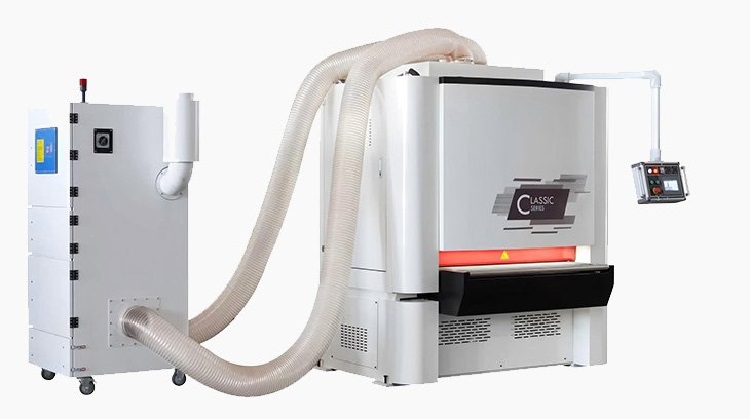
As the standard and most versatile model, dry deburring is perfect for carbon steel or non-hazardous materials.
Key Advantages:
- Lower initial equipment investment.
- Simpler, cleaner daily operation.
- 100% clean and consistent results.
Note for Aluminum/Titanium: When handling aluminum or titanium metals, use a wet dust collector to prevent dust explosion hazards.
Wet Mechanical Deburring Systems
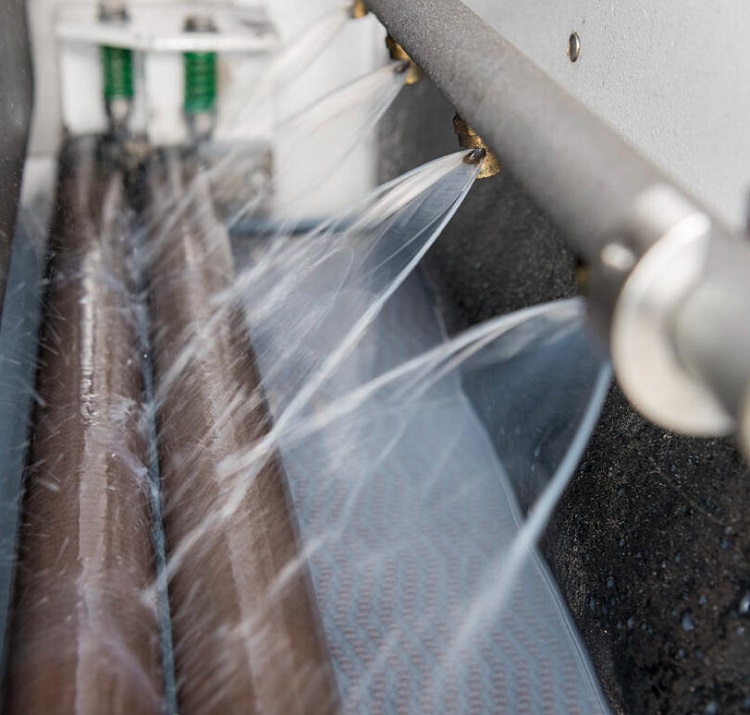
As the ultimate solution for thermal protection, the wet deburring system is ideal for aluminum or titanium materials with dust explosion hazards.
Key Advantages:
- Prevents hazardous fine particles from aluminum, magnesium, and titanium.
- Ensures thin stainless steel sheets are finished without thermal warping, heat distortion, and discoloration.
Quick Selection Checklist
| Dry System | Wet System | |
| Initial Equipment Cost | Lower (Budget-Friendly) | Higher (Includes filtration & pumps) |
| Coolant / Waste Disposal | None (Clean & Simple) | Requires coolant maintenance & sludge filter bags |
| Combustible Dust Risk (Al/Ti) | Requires certified wet dust scrubber | 100% Inherently Safe (Zero Risk) |
| Thin Sheet Thermal Protection | Moderate | Maximum (No Heat Distortion) |
7. How Does Mechanical Edge Rounding Protect Surface Coatings and Prevent Corrosion?
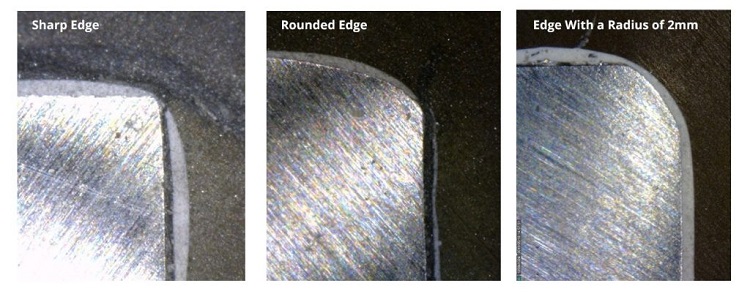
Most of the time, paint and powder coating flaking or peeling off is not caused by cheap paint; it may be coating edge pull-back. If you leave sharp edges without treated, your workpieces will rust immediately.
The Mechanical Deburring Solution
Running your parts with flexible rotary brush heads, the sharp 90° corners will break soon into a uniform, smooth radius (typically 0.5mm to 2.0mm). With an edge rounding machine, you will get consistent rounded edges passing rigorous ASTM B117 tests and ISO 12944 standards.
8. How to Choose the Right Mechanical Deburring Setup?
Matching your perfect mechanical deburring configuration is not complicated. You do not have to navigate all deburring machine specifications. Evaluate your production needs:
Step 1: Identify Workpiece Geometry
Are your materials flat sheet metal, laser cutouts, or stampings? Then the conveyor-fed abrasive belt and rotary brush machine is your choice. If you are processing solid bars, hex stock, or heavy rods, then you should choose a heavy-duty bar chamfering machine.
Step 2: Determine Material Mix
Are you processing a single material or mixed materials like steel, stainless, and aluminum? For single steels, a dry deburring system with extraction is enough. Otherwise, you are better off choosing a wet deburring system or a dry deburring system with a wet dust collector to avoid cross-contamination.
Step 3: Evaluate Minimum Part Dimensions
If your parts are standard (> 150 mm), then a high-friction rubber conveyor belt is enough. However, if your parts are small (< 100 mm), then never forget to apply a small parts deburring machine with a high-suction vacuum bed or permanent magnetic conveyor to prevent part shifting.
Step 4: Define Edge Quality & Throughput Goals
For basic slag or heavy burr removal, the single or double abrasive belt head is sufficient. For a powder-coat-ready finish and R2 edge rounding, you need a combination system with 1 or 2 abrasive belts and a rotary brush station.
9. What Maintenance Practices Keep Mechanical Deburring Equipment Running at Peak Efficiency?
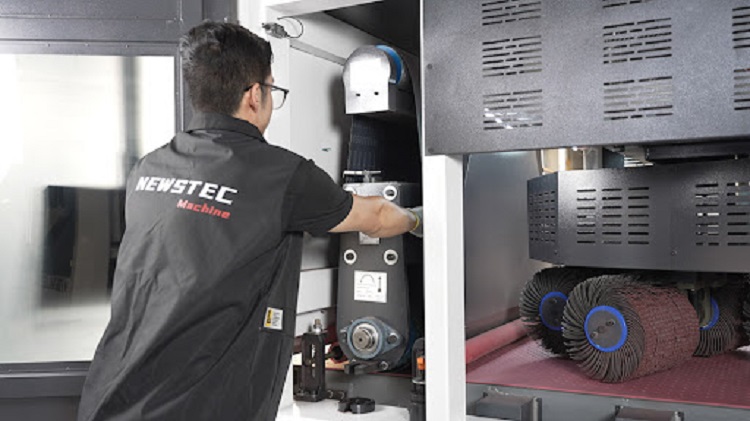
The mechanical deburring system is a long-term capital investment. To prevent unexpected downtime and maximize your belt lifespan, follow the maintenance routine below:
Daily Care
Dry Systems: To prevent airflow blockages and maintain optimal extraction suction, you need to clean and clear the dust collection hoppers daily.
Wet Systems: To avoid bacterial buildup and ensure active rust protection, you can clean wet filtration sludge trays and check coolant fluid levels every day.
Weekly Inspection
Abrasive Belts: Inspect them for tracking alignment, grit loading, or edge fraying.
Brush Wear: Check rotary disc brushes for uneven wear.
Bi-Weekly Mechanics Check
On conveyor deburring machines, check vacuum bed seals, belt tension, and suction power.
On the bar chamfering machine, inspect hydraulic vise jaws for self-centering accuracy.
Monthly Lubrication Schedule
Monthly grease main spindle bearings, conveyor drive gearboxes, and linear guide rails.
Conclusion
Mechanical deburring has evolved into a highly standardized, automated competitive advantage. Upgrading your finishing line is not just about replacing manual hand-grinding; it is about improving your workshop’s throughput, protecting your workforce, and delivering flawless edge quality. ARMPRE Machinery provides you with 100% free sample testing & edge analysis and customized line configuration. Contact our technical specialists today and schedule your free sample processing test now.
FAQ
Q1: What is the difference between a mechanical deburring machine and a wide-belt sander?
▼
A wide-belt sander is designed primarily for flat surface calibration and graining.
Engineered with flexible rotary brush heads, oscillating disc stations, and vacuum beds, mechanical deburring provides rounded, sharp edges 360 degrees and removes laser slag.
Q2: Can the mechanical deburring process parts with protective PVC laser foil without peeling the foil?
▼
Yes. Do not worry.
Designed with height precision and flexible abrasive brushes, the mechanical deburring applies soft and gentle force while keeping the protective laser film intact and unpeeled.
Q3:Why is hydraulic clamping necessary for solid bar chamfering?
▼
Without hydraulic clamping, the solid steel or stainless steel bars may shift or slip under heavy loads. So, by locking the bar right near the cutting zone, the hydraulic self-centering vises ensure you get zero-vibration, mirror-like chamfers.
Q4: SHow do I prevent cross-contamination rust when switching between carbon steel and stainless steel?
▼
The best choice is to use separate abrasive belts and brush sets for each material during processing.
Q5: What abrasive belt grit should I use for heavy laser slag removal?
▼
For heavy fiber laser or plasma cut slag on carbon steel, coarse-grit belts (typically P60 or P80 ceramic or zirconia grain) are the right choice.
For light punch burrs or surface graining, finer grit belts (P120 to P180) are recommended.
Ready to elevate your production quality?
Investing in a high-quality sanding machine is a decision that impacts your manufacturing precision and efficiency for the next 5 to 10 years. Don’t settle for instability. Choose a reliable partner to secure your competitive edge in surface finishing.