
What’s the difference between Brushed Stainless Steel and Stainless Steel and why does it matter so much after the production process begins to show up tiny differences that start to impact quality, cost and consistency over time?
From medical systems to food processing and architecture, stainless steel forms the backbone of modern industry; however, its surface treatment can have consequences much greater than many realise.
Brushed Stainless Steel vs Stainless Steel comparison reviews the look of the material, but the comparison in real production conditions extends beyond that – into how it performs during production, how tools wear over time and how the results hold up from batch to batch.
At first glance, it appears to be a straightforward decision, but the finish isn’t applied at the end; it’s a direction in the process that impacts the very beginning and throughout the product’s life.
Let’s take a look at how this difference comes about and why it starts earlier than it seems.
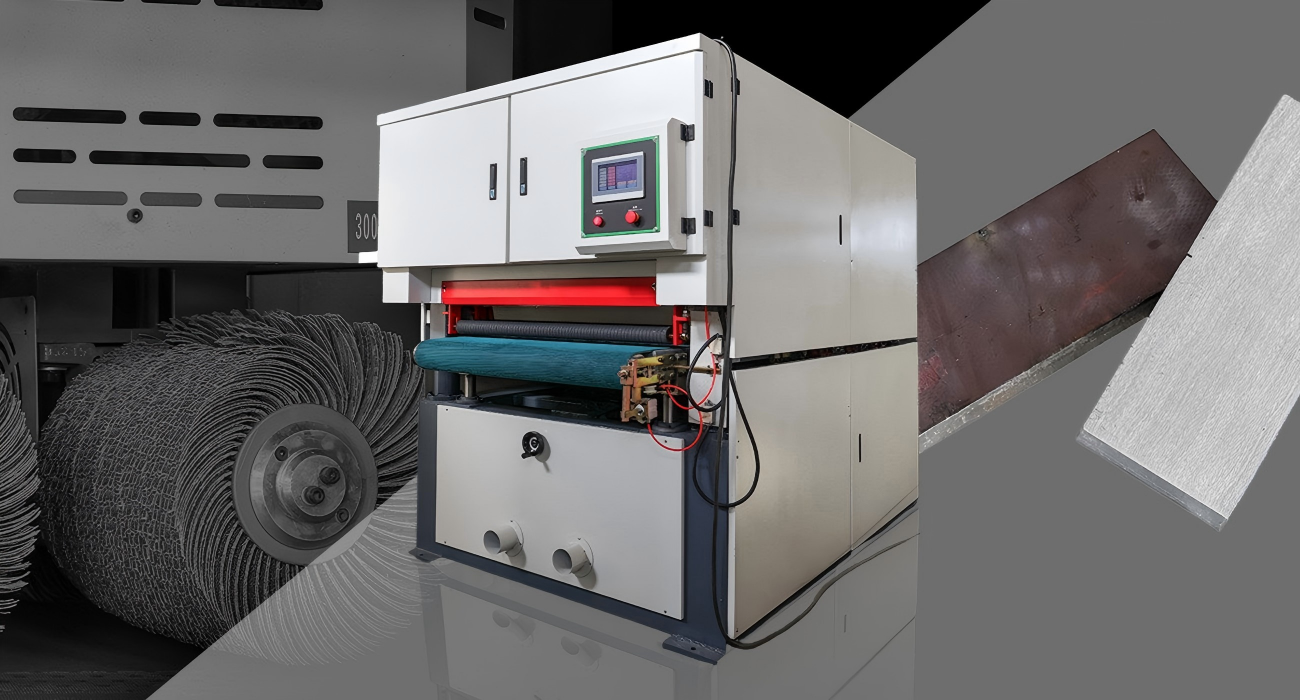
1.Defining the Contenders: What’s the Difference?
From a cursory look, both finishes seem to be from the same stock. However, as the processing route splits, the surfaces react in vastly different ways when handled, exposed to light and over time to use.
➢ Standard (2B / BA Finish) Stainless Steel
Standard 2B or BA stainless steel provides a controlled starting point and will have either a soft matte finish or a bright, reflective finish, depending on the finishing treatment during rolling and/or annealing.
The BA finish is, in particular, very reflective, like a mirror, which is great until it starts to show up some inconsistencies on the surface that are more noticeable than you’d hoped, particularly when lit by practical lights and viewed from different spots across multiple sheets.
This type of finish is generally utilized in early stages of manufacture due to the very predictable behavior when cutting, bending or welding, which becomes very important when production volumes need to increase without unnecessary variability.
➢ Brushed Stainless Steel (No. 4 / Hairline Finish)
This finish features a brushed texture that imparts a natural, slightly antique look.
Abused stainless steel, however, goes in a different direction, where the abrasives are controlled to move in a specific direction across the surface, resulting in a visible grain and changes in how the surface reflects and reacts to light and physical contact.
The resulting texture helps to diffuse reflections and helps to camouflage minor scratches or handling marks because the surface blends in with the grain; hence, it is a popular choice in areas where interaction is a natural part of the world and the surface needs to stay looking the same.
There is a subtle but important distinction here: The objective isn’t to stop wear, but to control it as it progresses over time.
Let’s have a look at the comparison table:
| Property | Standard Finish (2B / BA) | Brushed Finish (No. 4 / Hairline) |
| Reflectivity | High, especially in BA | Lower, diffused directional reflection |
| Fingerprint Resistance | Low, marks clearly visible | Higher grain helps mask smudges |
| Scratch Resistance | Scratches stand out sharply | Scratches blend into the grain pattern |
| Surface Roughness (Ra) | Lower Ra, smoother surface | Higher Ra due to abrasion |
2.Performance in Practice: Durability and Maintenance
These types of finishes are easily distinguishable from each other based on their respective characteristics as shown through their advantages and disadvantages, since the behavior of the material over time will depend on their surface material when touched and subjected to environmental changes as well as cleaning over time.
Brushed finish will have the advantage of not having a tendency to collect finger prints and oil residues as well as dust particles and thus look clean without the need for cleaning them on a regular basis especially on surfaces that are constantly being used and touched.
It is still necessary for the layer of chromium oxide that prevents corrosion to remain intact. Proper cleaning will keep this layer undisturbed while cleaning it with contaminants will make it unstable for some time before returning to its usual state.
Cleaning adds another layer of discipline as cleaning according to proper techniques and methods would ensure uniform surface properties while improper cleaning can cause inconsistencies to pile up.
3.The Manufacturer’s Perspective: Processing and Challenges
From the production perspective, however, brushed finishing tends to be anything but straightforward, manifesting as a complex system of interrelated variables, some of which can be hard to discern on a trial basis, but whose effects are hard to miss as production scales up.
The heat buildup during grinding is one such silent but highly influential factor, particularly when working with thin sheets, where the heat generated by the process may cause internal strain that does not necessarily manifest right away but instead appears as warping after assembly and installation.
The consistency aspect is the place where it all starts to become truly challenging because even the slightest fluctuations in terms of pressure applied, abrasives’ wear and machine settings will begin to make themselves felt in the finished product, which is best discernible by comparing samples from different batches.
At this point, automation stops being seen as a nice option and becomes an imperative because maintaining a consistent brush pattern over time would simply be impossible.
4.Critical Link: Why Deburring Is Non-Negotiable before Brushing
Before any brushing starts, there may be burrs on the stainless steel from cutting or laser processes. While these might seem like small issues, they will affect finishing in ways that compound quickly over production cycles.
Sharp burrs will damage abrasive belts, shorten their lifespan, and introduce inconsistencies into the process, leading to increased production costs that will not be recognized as such and will be hard to attribute to the proper source.
Another problem with burrs is that they may become embedded in the material during the brushing process, thereby affecting future corrosion resistance and cleanliness, and possibly compromising visual consistency in certain applications.
The issue with edge rounding is the elimination of sharp edges in favor of smooth transitions. This way, light will flow more freely, and the result will be more fluid, making it a more aesthetically pleasing option.
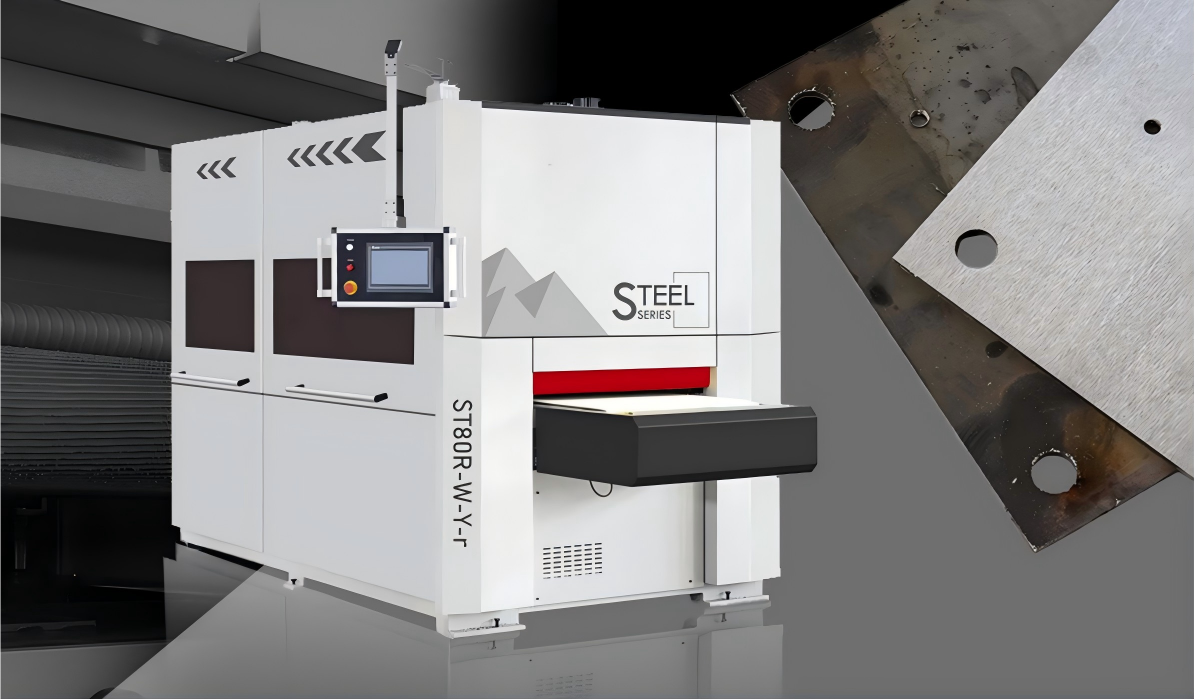
At Armpre Machinery, we know that achieving great finishes starts with the preceding processes, including brushing. Without removing the burrs after the laser-cutting phase, the process becomes highly inconsistent, no matter how good the finishing touch is.
| Production Challenge | Impact on Quality & Cost | Armpre Automated Solution |
| Edge Burrs | Damages abrasive belts; shortens tool life | Automated Deburring: Eliminates sharp edges before brushing |
| Heat Buildup | Causes internal strain and warping in thin sheets | Controlled Grinding: Optimizes pressure and speed to minimize thermal impact |
| Inconsistency | Slight pressure/wear fluctuations ruin batch uniformity | Process Automation: Ensures repeatable parameters and uniform finish |
| Corrosion Risk | Burrs embedded during brushing compromise oxide layer | Edge Rounding: Creates smooth transitions for better surface integrity |
| Manual Handling | High labor cost and unpredictable results | Integrated Systems: Streamlines production from laser-cut to flawless finish |
5.Making the Decision: Which One Fits Your Project?
The choice between one or the other is not so much a question of personal preference and taste as it is one of context, since the intention behind the use of the material will dictate what type of surface behavior will be required over time, not the initial appearance.
In general, a polished finish would be the recommended choice for use in a medical or food processing environment, since it will minimize any risk of contamination and make it easier to clean the surface within such a hygiene-sensitive environment.
Nonetheless, a brushed finish would prove better suited in an architectural setting, or in making furniture, as minimizing the amount of light reflected off the surface, as well as maintaining a consistent appearance, will take precedence over a mirror-smooth surface.
Conclusion:
The finishing process doesn’t create a consistent and high-quality stainless steel surface; it is set much earlier during edge preparation and surface treatment and will affect the response of the material to all subsequent processes.
Through this perspective, the controversy of brushed stainless steel vs stainless steel is no longer a visual one, but rather a process one involving the preparation, control, and long-term performance of the product.
Getting reliable results requires more than brushing – the material entering this process must be stable, clean, and properly prepared to behave predictably under controlled conditions.
Achieving the gold standard in stainless steel finishing requires the right tools. Explore how our automated deburring and finishing systems at Armpre Machinery can streamline your production and ensure a flawless brushed result every time.
Choosing between brushed and standard finishes is a strategic decision for your product’s lifecycle. For those looking to upgrade their production line, exploring the top 10 deburring machine manufacturers can provide valuable insights into the latest automated finishing technologies available today.
👉 Just Have A See: Top 10 Deburring Machine Manufacturers: 2026 Global Sourcing Guide
FAQ
Q1: Why do we process standard stainless steel into a brushed finish?
▼
In areas of critical visual and functional control, such as those with uncontrolled reflections and/or uneven wear, standard surfaces are brushed, diffusing light and directing wear patterns, ensuring that the surface retains a consistent look and feel over time even when continuously handled.
Q2: Is brushed stainless steel more prone to rust than regular stainless steel?
▼
Brushing of stainless steel has no negative effect on the surface’s corrosion resistance as long as the surface is cleaned under a controlled environment, as the passive layer of chromium oxide naturally formed on the surface remains after brushing and is sufficient to provide the protective effect.
Q3: What grit should I select for my product according to the application?
▼
The pattern and character of the grain are directly related to the grit number selected, with lower numbers increasing the pattern and character of the grain, and higher numbers decreasing the pattern and character of the grain; lower numbers are useful for the pattern and character of the grain to be more visible and more pronounced when in use, and higher numbers are useful when the pattern and character of the grain are desired to be finer and less noticeable when in use.
Q4: Why will the edge color of the brushed parts be lighter or uneven after welding or cutting?
▼
The surface of the metal can also change colour during welding or cutting, which may be due to the change in the behaviour of the oxide layers that form on the surface when the metal is subjected to high temperatures.
Q5: A deburring machine is used in the stainless steel products to enhance the yield of products,how?
▼
Deburring will eliminate sharp edges and material that could damage abrasives or embed itself in the surface during brushing, resulting in a more consistent finish and lower rework and production instability from batch to batch.
Q6:Is it possible to repair the scratches on used brushed stainless steel?
▼
A light surface scratch is often blended back into the existing grain by refinishing in the same direction, whereas a deeper scratch typically requires a more controlled refinishing process to create a uniform texture that blends with the rest of the surface.
Q7: Is brushed stainless steel the same as satin stainless steel?
▼
Brushed finishes, at first glance, seem similar to satin finishes but they create a more directional grain and are generally more textured and more clearly visible than satin finishes.
Q8:How to obtain a constant, brushed colored batch in mass production?
▼
The key to consistency is in keeping the machines’ parameters stable, keeping abrasives in uniform condition under the control of the machine, carefully controlling the pressure applied, and by proper surface preparation in advance, ensuring that each batch responds to brushing in a predictable and repeatable manner.
Ready to elevate your production quality?
Investing in a high-quality sanding machine is a decision that impacts your manufacturing precision and efficiency for the next 5 to 10 years. Don’t settle for instability. Choose a reliable partner to secure your competitive edge in surface finishing.

About Smaria
I am a technical specialist at ARMPRE, dedicated to mastering the art of industrial surface finishing. I focus on bridging the gap between sophisticated automation and real-world manufacturing, ensuring every workpiece achieves consistent edge perfection and a flawless finish that maximizes your long-term ROI.