
When choosing the right metal finish, understanding brushed vs satin stainless steel characteristics is critical for your manufacturing line. These two industrial finishes are totally different!
A brushed finish has a directional linear pattern and is produced with an abrasive belt (usually 120#-240# grit). It has a slightly grainy surface, it’s highly scratch resistant, and it generally is better than a satin finish for many bottom line applications.
The satin finish has no grain, and produced a smooth surface of diffuse reflections by utilizing finer abrasives or nylon brush rollers (320# grit and above).
Satin finishes resist fingerprints and glare better than brushed finish, have a softer look.
If you’d like the appearance of brushed metal, but the feel of satin, a “Brushed Satin” finish can be achieved with sophisticated multi-station automated deburring equipment.
This guide will give the reader insight into the difference between the two finishes, why these finishes matter for your bottom line and how you can affordably convert the $30 of your common 2B mill finish to a professional finish that will help win the contracts.
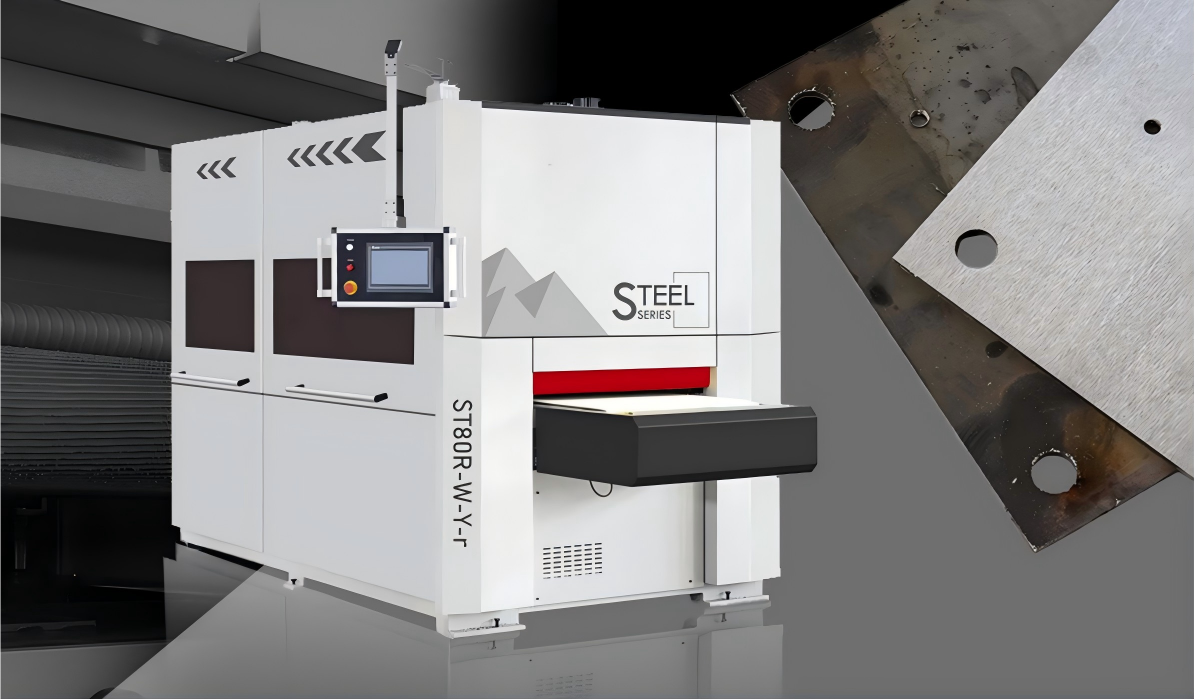
1.Brushed and Satin Finishes – Are They the Same?
There is confusion surrounding brushed stainless steel versus satin stainless steel, so first let’s define the two. Lots of times the term “brushed” is used for a No. 4 finished stainless steel.
No. 4 is the standard in the industry due to its desirable durability, great look and ease of producing.
2.Visual Characteristics of Brushed & Satin Finishes
Brushed finishes are directional line patterns. Linear patterns are brought about by abrasive of polishing processes where the actual material is physically cut into.
When you run your fingers across the “brushed” finish, you will find that you feel just a shade of texture or tooth to the surface. That’s part of the brushing process.
Satin finishes, on the other hand, have NO grain, they provide a smooth surface with diffuse reflection of light.
We describe satin finishes as more skin-friendly or silky feeling, compared to a brushed finish.
Why does it matter if it is brushed, or satin? The difference will effect how the part is cleaned and the final surface coating will adhere to the finished part. Going the route of the wrong finish could lead to product failure, and disappointment for your customer!
3.More about Brushed Finish
Almost always, “brushed” refers to a No. 4 brushed stainless steel finish. A No. 4 brushed finish has been named industry standard because of its durability, aesthetic appeal, and easy production.
Visual & Tactile Characteristics
Brushed finishes are directional linear in appearance, evidenced by short parallel lines on the surface of the metal.
Each line pattern is a light suspended allusions in the metal, tilting its apparently position each time the sheen angle tilts.
The brushed part is textured to somewhat to the touch, and the linear pattern can be felt when you run your finger across the finish of the metal surface.
The brushed finish in this regard has tactile attributes that are for reasons other than visual.
Technical Details of a No. 4 Brushed Finish
| General Feature | Requirement |
| Abrasive Belts | 120#-240# grit (Coarse to medium) |
| Ra Value Average Roughness | 0.5-1.5 μm |
| Reflectivity | Medium-shiny finish / Diffused glare |
| Grain / Scratch Pattern | Coarse to medium grits can produce a differences from coarse to fine scratch pattern. |
The greater the number in the grit the less coarse is the scratch pattern. “Average Roughness” is based measurements of the ups and downs (peaks and valleys) of a completed surface.
The average roughness is based on measuring the ups and downs (peaks and valleys) of a finished surface. The linear scratches present in a brushed finished product create patterns that diffuses light instead of producing significant amounts of glare.
This is an important factor to consider if your finished surface is to be used in an environment that requires glare-free surfaces.
Recommended Uses
Where will a No. 4 brushed finish perform well?
- Industrial / Commercial Kitchens:Refrigerators, prep tables, backsplashes. The directional grain of the No. 4 brushed finish allows pots and pans to help disguise daily scratches, and the daily cleaning/disinfecting scrubbing will not greatly effect its appearance.
- Elevator Exteriors:A brushed stainless steel finish gives an attractive, strong metallic appearance suggestive of durability and contemporary image. Brushed finishes deal well with making surfaces in heavy traffic, and greet every smudge right away.
| Finish Type | Abrasive / Tools | Ra Roughness Value | Visual & Tactile Characteristics | Fingerprint Resistance |
|---|---|---|---|---|
| Brushed (No. 4) | 120# – 240# Grit Abrasive Belts | 0.5 – 1.5 μm | Directional linear pattern, slightly grainy texture, medium-shiny/diffused glare | Moderate (Disguises scratches well) |
| Satin | 320# Grit+ / Nylon Brush Rollers | 0.2 – 0.8 μm | No visible grain, silky smooth feel, soft appearance with low glare | High Performance (Anti-fingerprint) |
| Brushed Satin | Multi-station (Belt + Nylon Matrix) | Consistent / Controlled | Maintains linear texture but softened, non-glossy, premium appearance | Excellent (Combines best of both worlds) |
4. More about Satin Finish
If a brushed finish is metallic in appearance, we could say it has a working, or utilitarian personality, of sorts.
The satin finish on the other hand has a diplomatic personality. Satin finishes are soft in their appearance, and utilized when we consider the brushed finish too noisy, visually.
Visual / Tactile Characteristics of the Satin Finish
“Satin” finish is warm and gives smooth heterosexual references to a brushed finish, and there is no obvious direction of grain, only a micro-textured state that emanates over the area of the satin finish.
Light that reflections from the satin will not necessarily be thrown back in the viewing direction and shine in the observer’s eyes.
Instead, light comes to the satin finish surface then glances from it in diffused discs producing a low-glare surface.
A satin finish “feels” extremely smooth, more skin-friendly and/or silken in it’s texture compared to the appearance of a brushed finish.
Technical Details of a Satin Finish
| General Parameter | Value |
| Abrasive Tools | Small. 320# grit or greater / Nylon brush rollers |
| Ra Value Average Roughness | 0.2-0.8 μm |
| Fingerprint Resistance | High performance anti-fingerprint surface |
Polishing approach required to achieve a smooth finish. Abrasive Belts: 320# grit or better fine abrasive material or nylon brush rollers (e.g.; Scotch-Brite) create satin surfaces in a polishing approach vs. cutting extraneous material as in brushed.
Fewer oil and dirt will be “hidden” on a smooth satin surface. Though great there is significant anti-fingerprint performance due to the smooth surface of satin finishes.
Recommended Uses
Where will a satin finish likely be utilized? Some recommendations would include:
- Bathroom Hardware:Faucets, towel bars and/or shower/bath fixtures. Users logically expect the use of high end, non-spotting or other responsible product.
- Laboratory/Medical Equipment:Reflective surfaces may confuse or even blind in certain precision applications. Thus, the low-glare surface is a necessity to the complete fabrication.
| Application Scenario | Recommended Finish | Primary Technical Benefit |
|---|---|---|
| Industrial & Commercial Kitchens | Brushed Finish (No. 4) | Directional grain effectively disguises daily heavy-duty scratches and survives frequent scrubbing. |
| Elevator Exteriors & High-Traffic Areas | Brushed Finish / Brushed Satin | Provides a strong, contemporary metallic appearance that handles heavy passenger contact. |
| Bathroom Hardware & Fixtures | Satin Finish | Delivers a high-end, non-spotting, skin-friendly, and silken tactile texture. |
| Laboratory & Medical Equipment | Satin Finish | Low-glare surface prevents reflections from blinding operators during precision applications. |
5. What is a “Brushed Satin” Finish?
The “Brushed Satin” finish is one of the most sought-after finishes due to the best attributes of both finishes. The Brushed Satin finish maintains the linear texture of a brushed finish, yet has undergone a secondary texturing process to soften its appearance.
Thereby creating the non-glossy, more sophisticated appearance of a satin finish.
While the Brushed Satin finish has received a substantial amount of attention, achieving this finish can be extremely challenging, as consistency is critical.
- The 1st step in the production of a Brushed Satin finish, one must mechanically “brush” the part creating the linear pattern.
- The 2nd step in the production of the Brushed Satin finish is to reduce the amount of light reflected from the peaks of the brushed texture using a fine mesh abrasive nylon matrix.
The problems with producing large areas for products, such as: refrigerator doors, automotive trim, etc lead to difficulty in achieving and maintaining both the depth of the brushed texture as well as achieving a uniform satin appearance.
The difference in pressure applied by individual manual operators and the difference in speed of each operator along with each individual single-head machine’s tendency to miss one of the two key production processes can easily cause a Brushed Satin appearance to look poor rather than premium.

6. Overcoming Consistency Challenges with Armpre Machinery
Automation is a true game changer for the production of the perfect Brushed Satin finish completely and consistently. Your need for simultaneous accurate control of multiple variables is the genesis of Armpre Machinery (armpremfg.com) and it will be our inspiration.
Two-Station Combined Processing
We will have you working with a multi-station combined process that eliminates human error in your manufacturing. The surface roughness Ra value will be consistent on every part.
Station 1 – Wide Abrasive Belt (Brushing)
The first of a two-station process, will occur at this station where a wide abrasive belt (brushing) produces the ultimate brushed finish with a directional grain on the complete material.
Station 2 – Flexible Nylon Roller
The part will head to the second station directly after the brushing operation where the surface is polished to satin finish. This softens the glare of the brushed surface and raises the gloss level without losing the brushed pattern.
The mutual effect of both the stations will be a perfect brushed satin finish from a single feed with no need for rework.
Edge Rounding Synchronization (The Armpre Advantage)
Edge Quality is a minor operator secret many manufacturers miss in the product quality control curve. Continued performing metal brushing or metal drawing by hand delivers microscopic sharp corners and burrs on the edges of the metal.
The result is that these microscopic imperfections are prone to damage the surface of the product when coating is applied. Paint will “peel” or “delaminate” from the edge of a product due to the inability to properly adhere to the surface of points.
Armpre’s equipment addresses this concern by synchronizing edge rounding with the surface finishing process through the simultaneous brushing and satin finishing of the surfaces of the metal and the rounding of the edges at the same time.
The result is the total elimination of sharp corner areas and powder coatings & paints will adhere perfectly, thereby improving the overall durability and serviceable life of your products.
Conclusion:
Stop giving away your profit margins, because the manual polishing you depend on creates inconsistencies in your finished product.
When a rejected part requires reprocessing, each hour spent in reprocessing is lost time. Automated multi-head brushes have a short payback period through:
- Reduced Labor Costs – One automated brush replaces multiple manual polishers;
- Higher Yield – The ability to produce consistent quality will result in fewer rejected parts;
- Increased Throughput – Automated machinery is faster and far more reliable than manually feeding parts.
Utilize a CNC ROI Calculator to determine how much you can save. Enter your current labor costs, rejection rates, and production volume into the calculator.
You will find that your investment in automated finishing equipment will produce a positive return on your investment in just a few months. Contact Armpre Today.
Don’t know which one to choose yet? You can compare and see the machine customization of ARMPRE
👉 Just Have A See: High-Precision Wide Belt Sanders for Industrial Finishing: Your Top Supplier
FAQ
Q1: What is the main difference when comparing brushed vs satin stainless steel?
▼
Brushed and satin are two different finishes. A brushed factor has a distinct directional linear texture cut in by abrasive sanding belts (i.e. 120# through 240# usually) from a satin finish that has a diffused sheen – and without the degree of ‘directionality’ in the sweet sense of direction in a satin finish.
Satin finishes utilize better abrasives or are produced by nylon brush rollers (i.e., 320# or finer).
Q2: What is the difference in surface roughness (Ra value) between brushed and satin finishes?
▼
Brushed value – Typical Ra value from about 0.5μm to 1.5μm, compared to satin from about 0.2μm Ra to .8μm.
Therefore, the value – a brushed value has a tactile difference from the textural value of the material to the tactile sensation of contact, whereas satin feels “silky smooth & warm”.
Q3: Which stainless steel surface treatment offers better fingerprint resistance?
▼
Satin finish provides very good fingerprint resistance due to its smooth microstructure and completion of the diffusing of light, satin will outperform and be better than the standard brushed finishes for combating and hiding fingerprints on its surface.
This might be important, on a counterpart of that effect of a product, that is, on those of fixtures being hit in high-traffic regions.
Q4: In what scenarios should I choose brushed satin over satin?
▼
If your product is used in industrial and commercial kitchen equipment or elevator exterior finishes, brushed satin is highly recommended.
Q5: What is meant by “Brushed Satin”?
▼
The “Brushed Satin” is a newly developed composite of the two previous standard descriptions of surface treatment concept. Yes, a composite does become a linear directional piece, but evolves a “second light catching finish” using fine nylon abrasive(s). So superior all around.
Q6: How does Armpre’s equipment solve the challenge of consistency in large-area satin finishing?
▼
The automation processes of Armpre (armpremfg.com) have been developed to combine two different processes into one, and complete process, i.e. a wide sanding belt to create a precise brushed finish and immediately the action of the flexible nylon roller satin finish.
The results is a single feed, and single process which produces an even satin finish on any width of product.
Q7: Why is edge rounding necessary during surface brushing?
▼
When brushing a surface, mechanical brushing results in microscopic sharp corners and burrs that will damage the rest of the component if not addressed. Armpre’s edge de-burring equipment also has the capacity to round edges at the same time as plasticizing the surface. When this occurs, the result is that sharp edges have been removed, and therefore, any finish (coating) applied to the product will adhere perfectly and will remain on the product surface without being damaged.
Q8: What specific consumables are needed to achieve a true satin finish?
▼
Traditional brushed finishing relies on standard abrasive sanders to produce the brushed finish. Therefore, when achieving the “high-end soft finish”/satin finish, one required to use non-woven nylon brush rollers as finishes using fine (320# and higher) materials. The role of fine abrasives (320# or higher) and molded foam hook-and-loop backings is critical in the creation of a true satin finish.
Ready to elevate your production quality?
Investing in a high-quality sanding machine is a decision that impacts your manufacturing precision and efficiency for the next 5 to 10 years. Don’t settle for instability. Choose a reliable partner to secure your competitive edge in surface finishing.
About Smaria
I am a technical specialist at ARMPRE, dedicated to mastering the art of industrial surface finishing. I focus on bridging the gap between sophisticated automation and real-world manufacturing, ensuring every workpiece achieves consistent edge perfection and a flawless finish that maximizes your long-term ROI.