
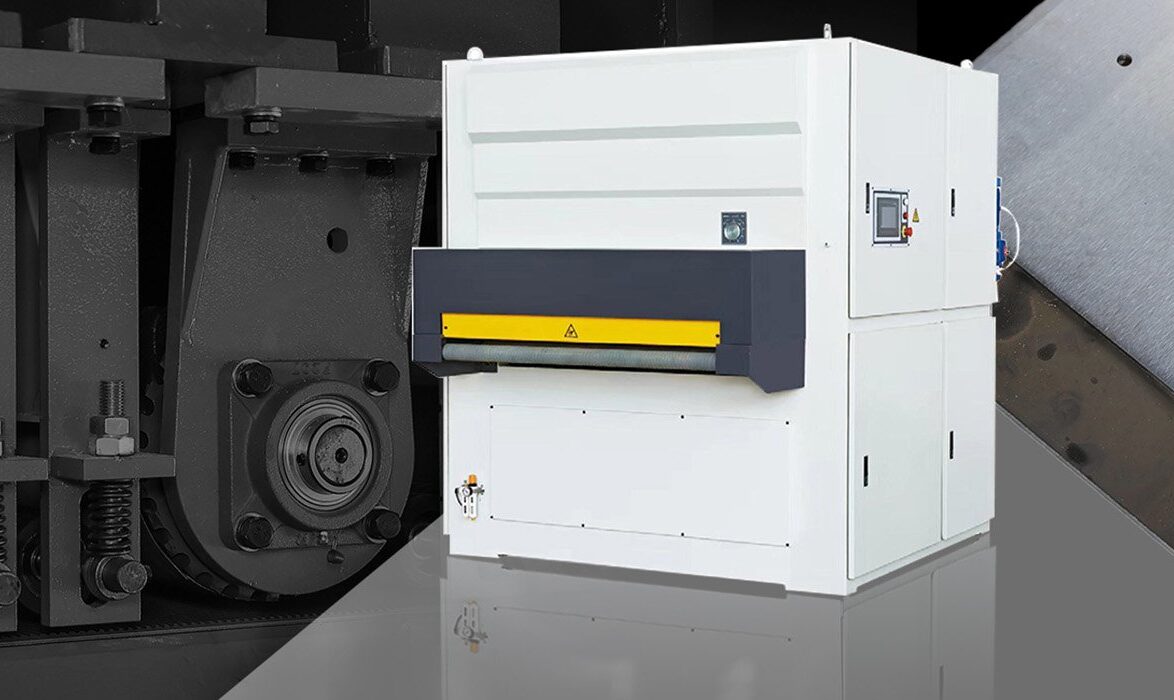
ARMPRE’s sanding machine has reached a high level of maturity, ensuring reliable quality in workmanship and guaranteed after-sales service
Hi, I am Joanna. If you want to know how to choose sanding machine models for your production line, you are in the right place. We all know that sanders and planer sanders are widely used in various industries.
Whether it is wood, metal, ceramic, rubber, plastic, stone or artificial materials, almost any solid material can be sanded. But do they use the same sanders? The answer is No.
When you are choosing your right machine, having ready answers to the following questions would be very helpful.
1.Which industry are you in,and what will your processed workpieces be used for.
The reason for this question is to choose the required finish smoothness. For example, sanders with two sanding frames, three sanding frames, or piano-key sanders can all do wood sanding. But the smoothness they achieve is distinct. If you need a common surface flatness for products like boxes, a two-sanding-frame machine will do. If you want to have a finer surface for decorative products ,a three-sanding-frame machine will work better. But if you want to achieve a matte skin-like surface for high-end furniture, piano-key sanders are the right choice for you.
A Checklist on How to Choose Sanding Machine Configurations
| Target Finish / Product | Recommended Machine Configuration | Achieved Surface Quality |
|---|---|---|
| Standard Flatness (e.g., Boxes, Crates) | Two-Sanding-Frame Machine | Common surface flatness and basic calibration. |
| Finer Decorative Surfaces (e.g., Panels) | Three-Sanding-Frame Machine | Enhanced smoothness suitable for secondary finishing or premium coating. |
| Matte Skin-like Coating (High-End Furniture) | Piano-Key Sander | Ultra-fine, premium tactile texture with zero veneer sand-through risk. |
2.The information about workpieces, such as :
- Material type. Since even using exactly the same sander, the sanding result will be different on various materials based on their rigidity.
- The range of workpiece sizes. This information is used to determine the size of the conveyor belt.
- Check whether the workpiece hasperforated holes or a curved surface. This means that extra deburring operations and profile sanders may be required for the hole edges and a curved surface.
- Previous process. Especially for metals, different cutting methods cause different degrees of slag, drossand burrs on the edges. Sometimes, rotary brushes are brought in for minor burrs, while a hammerhead is required for heavy slags. A picture of your workpiece would be very helpful.
| Previous Process | Typical Edge Defect | Required Deburring / Finishing Tool |
|---|---|---|
| Laser Cutting / Perforated Holes | Minor burrs, sharp micro-edges | Rotary Brushes & Profile Sanders |
| Plasma / Flame Cutting | Heavy slag, dross, thick burrs | Hammerhead (Slag Remover) + Abrasive Belts |
| Post-Surface Treating | Oxide layer, uneven grain | Wide Abrasive Belts (Oxide Removal / Graining) |
3.Your expected finish result:
oxide removal, sanding, deburring, edge rounding or surface graining. Reference pictures or even sample pieces would be highly valued for finish result confirmation.
4.Automation level:
fully automatic, semi-automatic or manual. We will not impose any costly functions on you. So you always have the flexibility to choose the right one for yourself.
Automatic feeders, panel flippers, board stackers, gantry loaders, they are always ready to be equipped to your machines.
5.Expected processing efficiency
A higher efficiency requires a higher configuration, which entails higher power consumption. You could make the decision based on your actual situation.
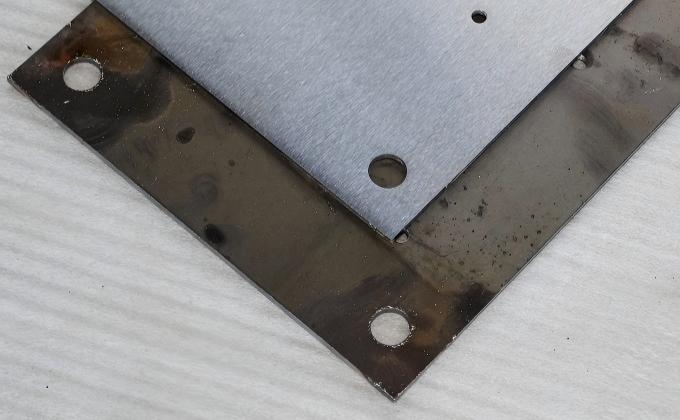
armpre.com offers tailored industrial solutions to help clients achieve competitive advantages.
6.Whether the machine needs to be integrated into a production line
If this is the case, we will use the standard communication protocols to connect to your existing production line.
7.Whether a dust collector is needed as well
With this information provided, you are very close to choosing your right machine.
| Production Context | Available Configurations | Operational Advantage |
|---|---|---|
| Standalone Operation | Manual / Semi-Automatic Control | Maximum flexibility, no costly or redundant functions forced on your budget. |
| High-Volume Production | Automatic Feeders, Panel Flippers, Board Stackers, Gantry Loaders | Significantly boosts processing efficiency while reducing manual labor intensity. |
| Connected Line Integration | Standard Communication Protocols | Seamless sync with existing production lines (e.g., linked directly to laser cutters). |
Ready to provide us your information and requirements to get your solution? Let’s start close cooperation from here.
Don’t know which one to choose yet? Explore the advanced machine customization options from ARMPRE, a reliable alternative to timesaver machines and fladder sanders.
👉Explore Now: High-Precision Wide Belt Sanders for Industrial Finishing at armpre.com
Ready to elevate your production quality?
Investing in a high-quality sanding machine is a decision that impacts your manufacturing precision and efficiency for the next 5 to 10 years. Don’t settle for instability. Choose a reliable partner to secure your competitive edge in surface finishing.
About Joanna
As an industry specialist at ARMPRE, I focus on the technical evolution of industrial sanding and surface finishing. My goal is to bridge the gap between complex automation technology and practical manufacturing needs, helping clients achieve ±0.05mm precision and long-term ROI.