
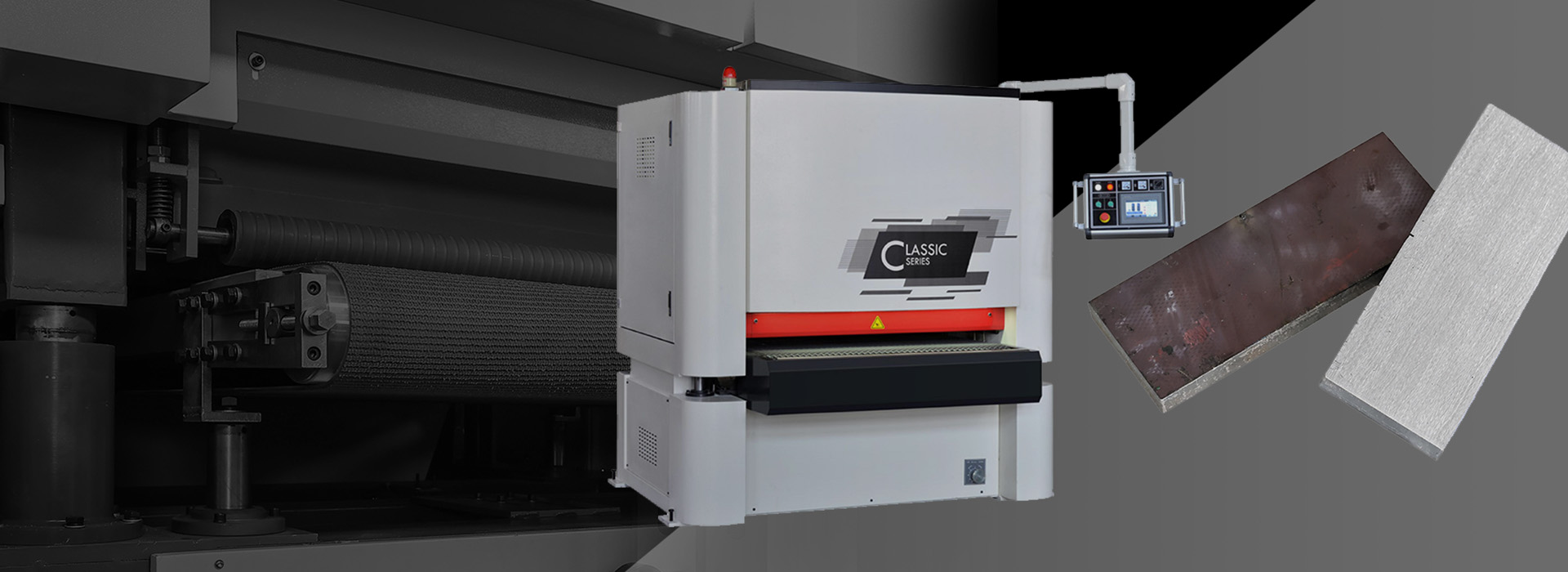
Hairline finish stainless steel is popular for its elegant, understated and finely uniform.. It has been extensively used in various industries, from construction to consumer electronics. Achieving that perfect, continuous line requires nearly absolute precision and high skill, while manual processing failed to make.
How to achieve perfect stainless steel hairline finish with zero-defect deburring? This post will give you a comprehensive exploring. What is hairline finish stainless steel? Why hairline is the “holy grail” of finishes? Why can’t manual processing achieve hairline finish stainless steel? Do you want to know these answers?
Come on and read!
1.What Is Hairline Finish Stainless Steel?
Hairline finish stainless steel is a type of surface with linear texture made with fine grinding processes. Unlike regular brushing, hairline finish pursues a “long and continuous” grain effect. Each line is as delicate, uniform, and parallel as a strand of hair. In fields such as high-end architecture, appliance panels and smart home devices, hairline finish is the popular and valuable surface option.
By 2026, achieving long-distance, large-area continuous textures without visible seam marks while strictly controlling surface roughness (Ra value) become a key indicator of processing capability. Traditional processes often struggle to balance aesthetic quality and consistency of the texture. And Modern automated processes can make better.
| Surface Finish | Texture Characteristics | Appearance | Typical Applications |
|---|---|---|---|
| Hairline Finish | Long, continuous and parallel grain lines | Premium metallic texture with low reflection | Elevator panels, luxury appliances, electronic products |
| Brushed Finish | Shorter directional grinding marks | Uniform matte appearance | General stainless steel decoration |
| Mirror Finish | Highly polished surface | High reflection | Decorative and premium applications |
| 2B Finish | Smooth mill finish without decorative grain | Soft gray appearance | Industrial stainless steel sheets |
2.Why Hairline Stainless Steel Requires Perfect Texture Control?
Why hairline texture is called the “holy grail” of surface finishes? There are two key reasons: the continuity of the texture and the precise control of surface roughness (Ra value).
Texture continuity
The lines of a hairline finish must be long, unbroken, and continuous. Even the smallest interruption will become clearly visible mark under light, and the entire panel will have to be downgraded. The cost of such defects is one of the most difficult problems in hairline finishing.
The strict requirements for Ra value
A hairline finish is not about being rougher or smoother. Instead, it needs to be highly uniform at the microscopic level. Even a small fluctuation in the Ra value will cause a visible difference. With tow conditions of unbroken texture and stable Ra value be conformed, can the core technique of hairline finishing be mastered.
3.Why Manual Processing Cannot Achieve Consistent Hairline Finish Stainless Steel?
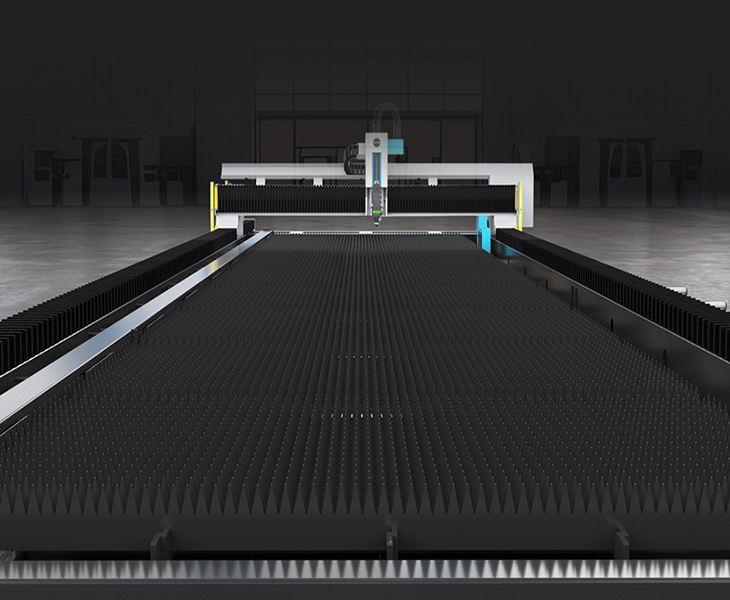
Do you rely on manual processing for hairline finishing of stainless steel? This is hard. Why can’t manual processing achieve stainless steel hairline finish? Here are the three main reasons.
Limitations of Manual Processing
Manual processing can easily ruin the linear beauty of the texture. A hairline finish requires long and continuous lines with a highly consistent direction. However, during manual deburring or polishing, even slight changes in hand pressure or angle can leave random scratches on the edges.
Risk of Heat Distortion
In manual finishing process, repeated friction in one area generates heat. Since stainless steel dissipates heat slowly, heat buildup can easily cause discoloration or oxidation marks on the surface. Once such heat-induced defects appear, they cannot be fixed later.
Difficulty in repairing scratches
The surface of hairline stainless steel is extremely sensitive. Any scratch or dent may ruin the overall finish. During manual processing, various accidental risks, such as tool contact or panel movement, can cause damage. Once the surface damaged, the entire sheet often scrapped.
| Processing Method | Texture Consistency | Surface Protection | Main Risk |
|---|---|---|---|
| Manual Grinding | Low consistency | High damage risk | Random scratches and uneven grain direction |
| Manual Polishing | Operator dependent | Medium | Heat distortion and surface defects |
| Automatic Hairline Finishing System | High consistency | Excellent | Higher initial investment |
4.Automatic Hairline Finishing Machine Solution for Stainless Steel
Are there automatic solution for hairline finish stainless steel? There are of course automatic solution for stainless steel hairline finishing. And ARMPRE provides an advanced stainless steel deburring machine solution for achieving consistent texture quality and zero-defect deburring. Here you may check the main advantage of automatic solution of stainless steel hairline finishing.
Multiple Brush Head Assembly
The system uses a multi-planetary brush head structure. Each brush rotates independently while revolving around a central axis, grinding the workpiece from multiple directions. This design delivers precise edge rounding without affecting the continuous nature of the existing hairline texture.
Constant Pressure Control
Equipped with a pressure sensor, the system monitors and maintains constant brush pressure against the panel in real time. This feature is especially critical when processing thin sheets such as elevator panels. It prevents panel deformation caused by uneven pressure, ensuring large-area panels remain flat after processing.
Non-Contact Protection
Feeding system uses an optimized conveyor design so that expensive panels, such as black hairline or titanium gold hairline finishes never get friction during processing. The panel surface stays completely intact, minimizing the risk of scratches. This preserves visual quality and the value of the material.
| Technology | Function | Processing Benefit |
|---|---|---|
| Multiple Planetary Brush Head | Processes edges from multiple directions | Maintains continuous hairline texture |
| Constant Pressure Control | Automatically adjusts brush pressure | Prevents deformation of thin stainless steel panels |
| Non-Contact Feeding Protection | Reduces surface friction during processing | Prevents scratches on premium finishes |
| Digital Process Control | Stores repeatable parameters | Ensures stable production quality |
5.Can Hairline Finish Stainless SteelQuality Be Digitized? Conventional vs. Automated Specs
To make the consistent and qualified hairline finish stainless steel, there are uniform industrial standard. Traditional hairline stainless steel finishing processing introduces random mechanical deviations that compromise surface integrity. In contrast, automated systems can eliminate these problems. The following chart is clear.
| Metrics | Conventional Processing | Armpre Automatic Processing |
| Grain Processing | Interrupted | Long, Continuous Grain |
| Edge Quality | Manual Scarring | Zero-Defect Deburring |
| Pressure Sensing | Random | AI Constant Pressure Control |
| Surface Roughness | Variable (Ra0.4–0.8μm) | Ultra-Fine (Ra < 0.2μm) |
| Heat Dissipation | Thermal Distortion | Cold-Process Air/Vacuum Cooling |
| Setup Repeatability | Operator Dependent | 100% Digital Presets |
6.What Industry Can Hairline Finish Stainless Steel Be Applied?
Hairline finish stainless steel is widely used across multiple industries due to its combination of aesthetics and durability. And here are the places you may come across with them.
Elevator Interiors
High-end elevator cabins have zero tolerance for surface scratches. In an enclosed, mirror-like environment, the slightest mark is rather obvious. The low-reflective properties and scratch resistance of hairline finish make it an ideal choice for elevator panels. At the same time, the processing requires uniform edge rounding and continuous and uninterrupted texture.
Luxury Home Appliances
Specialty finishes such as black hairline and titanium gold hairline are becoming the mainstream choice for high-end refrigerators, dishwashers and range hoods. These dark hairline finishes are extremely sensitive to surface defects. Any scratch or dent stands out sharply due to the color contrast. The non-contact protection of automated hairline finishing is rather essential.
High-End Equipment Enclosures
Hairline finishes are also used on products such as high-end speaker panels, smartphone middle frames and laptop casings. The hairline finish provides a premium metallic feel without easily showing fingerprints and oil stains like a mirror finish does. This texture is especially important for electronic devices that are touched frequently every day.
Conclusion:
Brushed stainless steel is irreplaceable in many fields. To make the perfect stainless steel brushing, automatic stainless steel brushing method is great choice. If you are confused by the many automated solutions, you may contact armpre ght now for the free technical consultation for your brushed stainless steel.
Achieving a consistent hairline finish requires precise control of deburring, edge rounding and surface protection. Our engineers recommend automated finishing solutions designed to maintain continuous grain texture while eliminating scratches and defects.
👉 Just Have A See: Stainless Steel Deburring Machine for Hairline Finish Applications
FAQ
Q1: Why is hairline finish stainless steel more valuable than brushed finish?
▼
Because hairline finish features longer, continuous grains with better visual consistency. Achieving this visual consistency requires precise control, eliminating the choppy patterns of manual brushing The high level of detail control gives it higher commercial value.
Q2: Will an automatic deburring machine damage an existing hairline texture?
▼
No. With an advanced planetary brush system, the flexible filaments adaptively contour only around sharp edges and hole perimeters. This highly localized abrasion leaves the perfect liner texture with the flat surface entirely undisturbed.
Q3: How does the machine avoid surface deformation when processing ultra-thin elevator panels?
▼
It relies on a built-in constant pressure control sensor that monitors and adjusts grinding pressure in real time, ensuring the pressure is uniform and minimal. This protects the structural stability of thin sheets without causing deformation.
Q4: Can hairline finish be applied to colored panels like black or titanium gold?
▼
Yes. Such panels are extremely sensitive to surface scratches and require special non-contact surface protection. ARMPRE equipment has dedicated process parameters for these materials to ensure the color layer remains intact.
Q5: What is long, continuous grain processing, and why does it matter for fabricators?
▼
It refers to achieving unbroken, long grain lines that run across the entire sheet. This is the core indicator of high-end hairline finish quality. If the grain is interrupted, the value of the whole sheet is greatly reduced.
Q6: How should hairline finish quality be accepted based on Ra value in 2026?
▼
Typically, the Ra value for hairline finish should be controlled within the range of 0.2–0.6μm, and the data fluctuation across the entire batch must be very small. A stable Ra value is the quantifiable proof of quality.
Q7:How effectively does the planetary brush system handle hole edges on hairline parts?
▼
It delivers 360° cross-directional chamfering via multi-axis synchronized rotation. This removes internal burrs completely without leaving random arc-shaped scratches around openings, maintaining primary linear texture consistency across the entire component.
Q8: What is the ROI period for investing in a hairline finishing machine?
▼
Capital investment is typically recovered within 8 to 12 months. The automated system lowers material scrap rates by 15–20% by eliminating manual errors, while boosting processing speed fivefold, reducing labor overhead and expanding monthly shop capacity.
Ready to elevate your production quality?
Investing in a high-quality sanding machine is a decision that impacts your manufacturing precision and efficiency for the next 5 to 10 years. Don’t settle for instability. Choose a reliable partner to secure your competitive edge in surface finishing.