
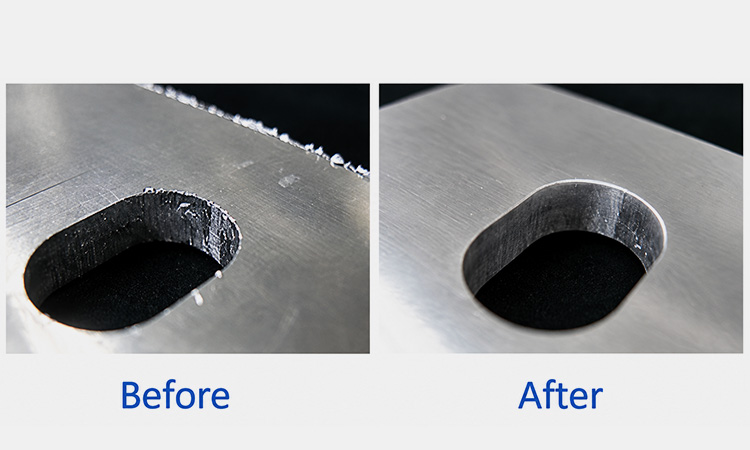
Laser cutting produces precise parts, but burrs, stubborn dross, and sharp edges can remain. These imperfections may affect assembly, coating, and handling, while removing them manually can slow down production.
So, how do you remove burrs efficiently without compromising part quality?
The right approach depends on your material, part size, edge condition, and production volume. From manual tools to automated deburring machines, each method has its advantages and limitations.
This guide explores practical laser-cut deburring methods and helps you choose the right process and machine for your application.
1. Why Do Laser-Cut Metal Parts Have Burrs?
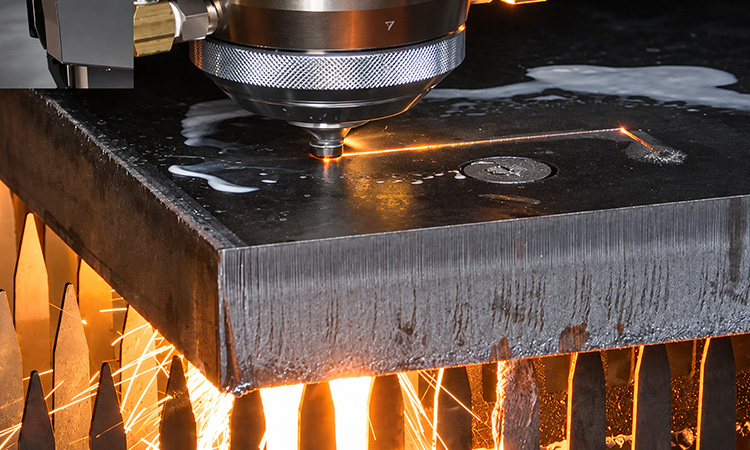
Laser cutting metal sheet process
Laser cutting is known for its precision, but even a well-cut metal part can have rough edges or stubborn deposits that require additional finishing.
During cutting, a focused laser beam melts the metal, while assist gas helps push the molten material out of the cut. When some of this material remains and solidifies along the edge, it can leave burr-like projections or laser cutting dross.
Several factors can affect the final edge quality:
Cutting parameters: Incorrect speed, power, or focus settings can lead to uneven edges.
Assist gas: Poor gas flow or unsuitable pressure can make molten metal harder to remove.
Material and thickness: Different metals and sheet thicknesses respond differently to laser cutting.
Nozzle condition: A worn or misaligned nozzle can disrupt gas flow and affect cut quality.
Before considering additional finishing, it’s worth checking whether the cutting process can be improved. Reducing defects at the source can save time and lower processing costs.
For burrs and rough edges that remain, the right laser-cut deburring method helps prepare parts for safer handling, smoother assembly, and subsequent finishing processes.
2. Do All Laser-Cut Parts Need Deburring?
Not every laser-cut part needs additional deburring. If the edges are already smooth and meet the requirements of the next production step, further processing may be unnecessary.
However, even small burrs or sharp edges can cause problems depending on how the parts will be used. Laser cut deburring becomes particularly important when:
Assembly: Burrs interfere with part fit, alignment, or fastening.
Handling safety: Sharp edges increase the risk of cuts during handling or installation.
Coating and finishing: Rough edges may affect coating coverage and the final appearance.
Product quality: Parts require consistent edge conditions to meet customer specifications.
The goal isn’t simply to remove every visible imperfection. It’s to achieve the edge quality your application actually requires.
For some parts, a quick manual touch-up is enough. For others, especially in high-volume production, automated deburring can help maintain consistent results while reducing manual work.
3. Burrs vs. Dross vs. Oxide Scale: What’s the Difference?
Not all rough edges on laser-cut metal parts are caused by burrs. Dross and oxide scale are also common cutting-related defects, and each requires a different finishing approach.
Burrs: Sharp Metal Projections
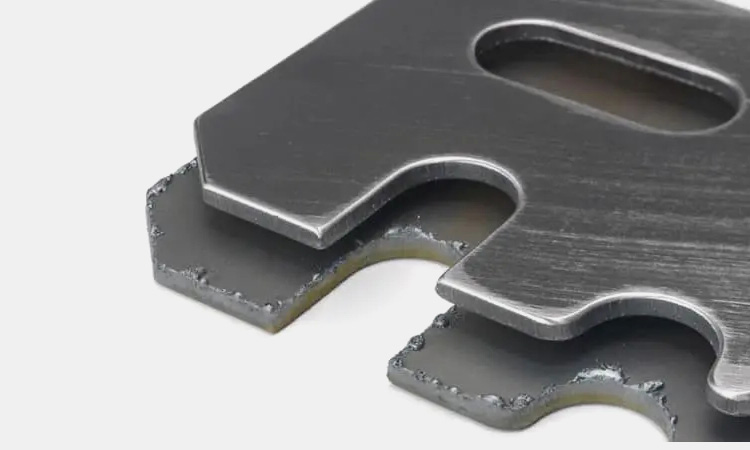
Burrs are small, raised metal edges that can affect handling, assembly, and part quality. They are typically removed using abrasive belts, brushes, or manual deburring tools.
Dross: Solidified Metal Deposits
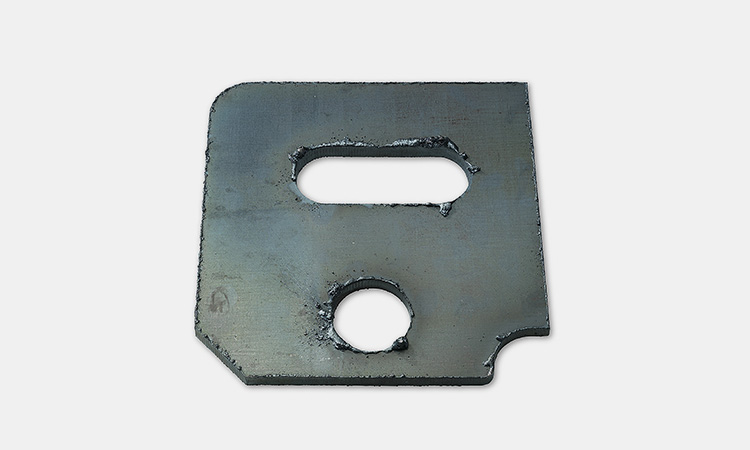
Dross forms when molten metal solidifies along the cut, often underneath the workpiece. Heavy deposits may require grinding or dedicated laser cutting dross removal equipment.
Oxide Scale: An Oxidized Surface Layer
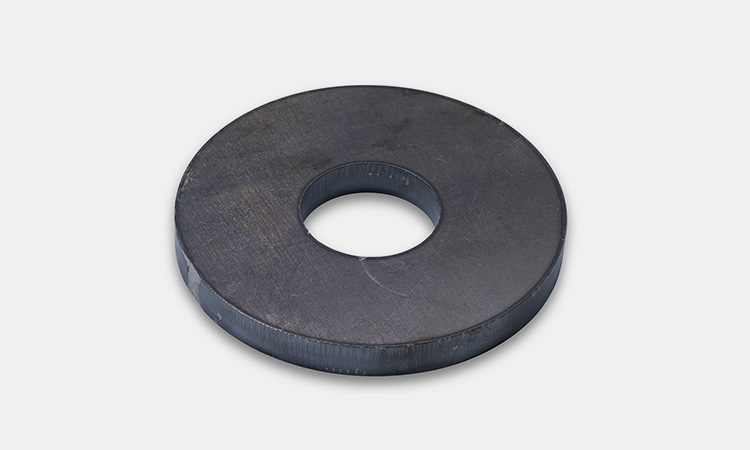
Oxygen-assisted laser cutting can leave an oxide layer on carbon steel cut edges. Depending on coating, welding, or other downstream requirements, this layer may need to be removed using suitable mechanical or surface preparation methods.
Depending on the next manufacturing step, this layer may need to be removed through brushing or other surface preparation methods.
Quick Comparison
| Main Characteristic | Typical Treatment | |
| Burrs | Sharp, raised metal edges | Deburring or edge finishing |
| Dross | Hardened metal deposits | Grinding or slag removal |
| Oxide Scale | Oxidized cut-edge surface | Brushing or surface preparation |
Effective laser-cut deburring starts with identifying the actual defect. Choosing the right process helps achieve the required edge quality without unnecessary finishing.
4. How to Remove Burrs from Laser-Cut Metal Parts
There is no single deburring method that works best for every laser-cut part. The right choice depends on the burr size, material, part geometry, and production volume. Different deburring technologies are suited to different burr conditions, part geometries, and production requirements.
Here are five common laser-cut deburring methods and where each works best.
Manual Deburring
Hand files, scrapers, and handheld grinders are practical for prototypes, repairs, and small batches. They offer flexibility but can be slow and difficult to keep consistent across large quantities.
Vibratory and Tumble Finishing
These methods use abrasive media to smooth edges on multiple parts in a batch. They work well for suitable small components, although delicate or flat parts may require special care to prevent damage or tangling.
Wide-Belt Grinding
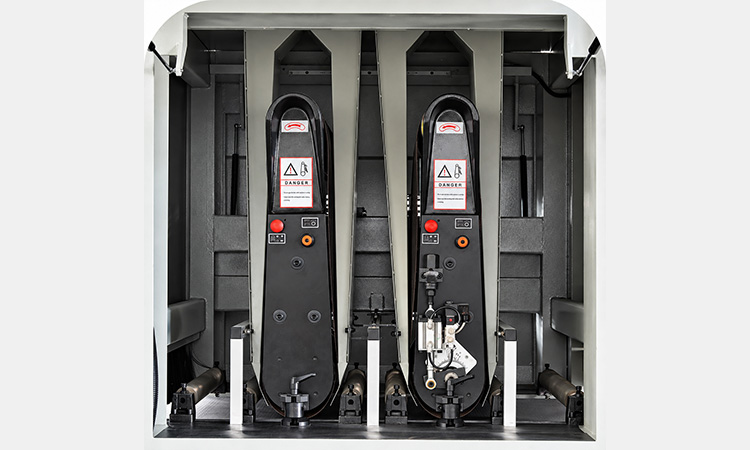
Abrasive belts remove raised burrs and surface imperfections from flat sheet metal parts. This method provides consistent material removal, but aggressive grinding can affect surface finish or part thickness.
Brush Deburring
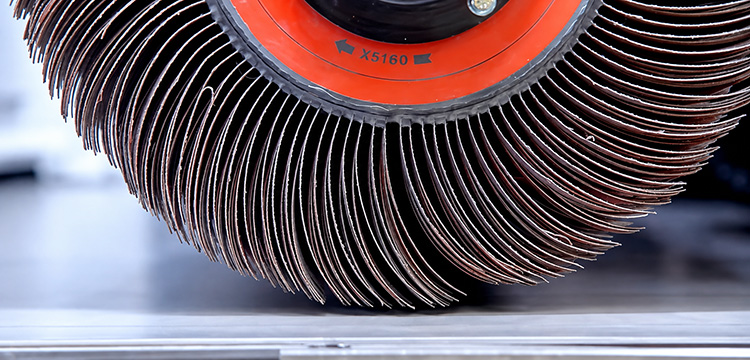
Abrasive brushes remove light burrs and can round sharp edges while following a part’s contours. Results depend on brush type, contact pressure, and the condition of the workpiece.
Automated Multi-Station Deburring
For higher-volume production, automated machines can combine grinding belts, brushes, and other processing stations to handle multiple finishing tasks in one workflow.
Depending on the machine configuration, these systems may support burr removal, slag removal, and edge rounding, reducing the need for separate manual operations.
Laser Cut Deburring Methods Compared
| Best Suited For | Main Limitation | |
| Manual deburring | Prototypes and small batches | Labor-intensive |
| Vibratory / tumble finishing | Suitable for small parts in batches | Risk of part damage or tangling |
| Wide-belt grinding | Flat parts with raised burrs | Limited edge-rounding capability on its own |
| Brush deburring | Light burrs and edge rounding | Less effective on heavy deposits |
| Automated multi-station deburring | Repetitive or higher-volume production | Higher investment and configuration requirements |
The most effective approach is not necessarily the most aggressive one. Matching the finishing method to the actual edge condition helps achieve consistent results while avoiding unnecessary material removal.
5. Which Deburring Method Is Best for Your Parts?
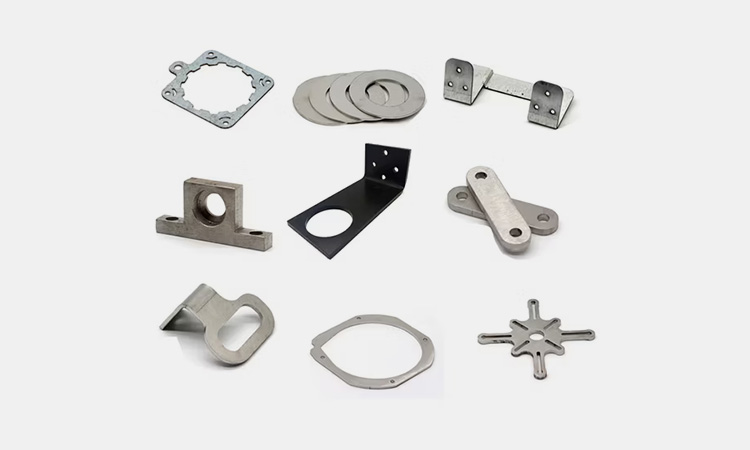
Choosing the right laser cut deburring method starts with understanding your parts—not simply choosing the fastest or most powerful machine.
Four factors can help narrow down your options:
Material Type
Carbon steel, stainless steel, and aluminum respond differently to grinding and brushing. The right abrasives and processing settings should match the material to avoid unwanted scratches, excessive material removal, or surface damage. For aluminum parts, choosing suitable abrasives and aluminum deburring machines can help achieve the required finish while limiting unwanted surface damage.
Part Size and Shape
Large, flat sheet metal parts are often suitable for conveyor-based deburring. Small, thin, or perforated parts require more attention to workpiece stability and holding methods.
For example, vacuum beds, magnetic conveyors, or pressure rollers may be considered depending on the material, machine configuration, and part geometry. Small parts deburring machines may use specialized holding systems to keep compact or irregular workpieces stable during processing.
Burr Size and Edge Requirements
Light burrs may only need brushing, while larger projections or attached dross can require grinding or dedicated removal stations.
If smooth, rounded edges are required for handling, coating, or assembly, edge rounding should also be considered—not just burr removal.
Production Volume
Manual deburring may be practical for occasional jobs or small batches. For repetitive production, automated sheet metal deburring can help improve consistency and reduce manual handling.
6. How to Choose a Laser Cut Deburring Machine
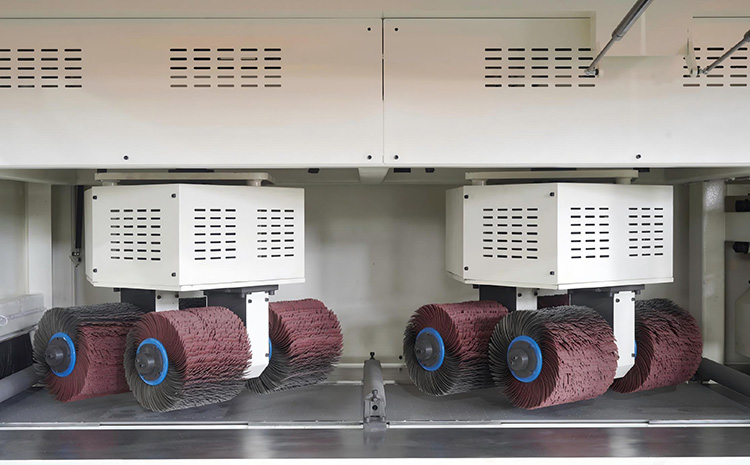
A good laser cut deburring machine should do more than remove burrs. It should deliver the required edge quality while fitting your parts, production workflow, and operating budget.
Before comparing machines, consider these five factors.
Material and Thickness Compatibility
Check whether the machine can process your carbon steel, stainless steel, or aluminum parts across the required thickness range. Abrasives, processing pressure, and machine settings may need to change between materials.
Workpiece Size and Holding System
Pay particular attention to your smallest parts. Vacuum beds, magnetic conveyors, and pressure rollers offer different holding options, but their suitability depends on part geometry, material, and machine configuration. When evaluating stainless steel deburring machines, consider abrasive selection, material thickness, and the required surface finish.
For small or perforated parts, sample testing is especially important.
Processing Stations and Edge Quality
Different finishing goals require different tools. Abrasive belts are commonly used for grinding and burr removal, while brushes can help with edge rounding.
If your parts also have heavy dross or oxide scale, ask whether the machine has suitable processing stations for those specific tasks.
Single-Sided vs. Double-Sided Processing
Some machines process one side at a time, while others are designed for double-sided finishing. If your production requires both sides to be processed in one pass, confirm the machine’s actual capabilities through technical specifications and sample tests.
Dust Extraction and Operating Costs
Look beyond the purchase price. Consider dust extraction requirements, abrasive consumption, maintenance access, energy use, and replacement parts.
Dust collection and fire-safety measures should also be evaluated for the materials being processed, particularly when working with combustible metal dust.
The best sheet metal deburring machine is not necessarily the one with the most processing stations. It’s the one that can consistently meet your finishing requirements without unnecessary complexity or operating costs.
7. Can One Machine Remove Burrs, Dross, and Round Edges?
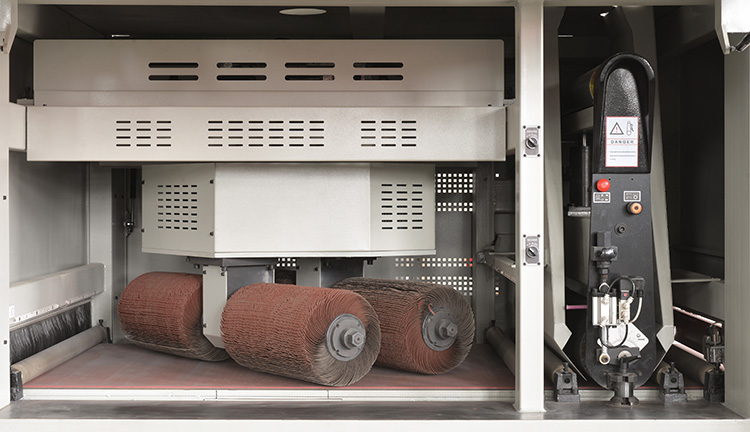
Yes, a properly configured multi-station deburring machine can perform several finishing operations in one workflow. However, not every machine can handle every type of edge defect.
Different processing stations serve different purposes:
Grinding belts: Remove raised burrs and prepare metal surfaces for further finishing.
Slag removal tools: Break off or remove firmly attached dross from laser-cut edges.
Abrasive brushes: Smooth sharp edges and create a controlled edge radius.
Oxide removal tools: Treat oxidized cut edges when required for subsequent processing.
By combining suitable stations, an automated laser-cut deburring machine may reduce manual handling and separate finishing steps.
However, processing results depend on the material, part thickness, defect severity, and machine configuration. Heavy dross, delicate parts, or specific edge-radius requirements may need additional consideration.
Before investing in a combined deburring and edge rounding machine, ask for sample tests using your actual parts. This helps confirm which operations can be completed together and whether the finished edges meet your quality requirements.
8. What Should You Check Before Requesting a Machine Quote?
Choosing a laser cut deburring machine is easier when you have a clear picture of your production needs. Before requesting a quote, prepare a few key details:
Material and thickness: Carbon steel, stainless steel, aluminum, and the thickness range you process.
Workpiece dimensions: Your largest and smallest parts, including any thin, perforated, or irregular shapes.
Edge condition: Whether you need burr removal, heavy dross removal, oxide removal, or edge rounding.
Production requirements: Daily output, feeding method, and whether single-sided or double-sided processing is needed.
Finishing expectations: Required edge radius, surface finish, and any specific quality standards.
Photos, drawings, or representative samples can also help the manufacturer understand your application.
Most importantly, ask for a sample deburring test before making a final decision. Testing your actual laser-cut parts helps verify the achievable finish, workpiece stability, and processing efficiency.
A well-matched machine starts with a clear understanding of your parts. Sharing the right information early can save time, avoid unsuitable configurations, and make the purchasing process more straightforward.
Conclusion:
Effective laser cut deburring isn’t just about removing rough edges. It’s about achieving the right finish for your parts while keeping production efficient and costs under control.
Whether you choose manual deburring or an automated solution, the best approach depends on your material, edge condition, part size, and production needs.
At ARMPRE, we understand that every application comes with different challenges. Share your part drawings, material specifications, or sample pieces with our team. We’ll help you evaluate a suitable deburring and edge rounding solution for your production requirements.
Frequently Asked Questions (FAQ):
Q1: Do laser-cut metal parts always need deburring?
▼
No. If the cut edges already meet your safety, assembly, and finishing requirements, additional deburring may not be necessary. Parts with sharp burrs, attached dross, or specific edge-rounding requirements may need further processing.
Q2:How can I reduce burrs during laser cutting?
▼
Start by checking cutting speed, laser power, focal position, assist gas pressure, and nozzle condition. Optimizing these settings can improve edge quality and reduce the need for secondary deburring, although it may not eliminate every defect.
Q3:What is the difference between deburring and edge rounding?
▼
Deburring removes unwanted metal projections along cut edges. Edge rounding creates a smoother, controlled edge radius. A part can be free of burrs but still have sharp edges that require rounding.
Q4:Can a deburring machine process aluminum and stainless steel?
▼
Yes, suitably configured machines can process both materials. However, abrasives, workpiece holding, and processing settings may differ. Dust extraction and safety requirements must also be evaluated for each material, particularly aluminum.
Q5: Can automatic deburring machines handle small laser-cut parts?
▼
Some machines can process small parts using suitable holding systems, such as vacuum beds, magnetic conveyors, or pressure rollers. However, minimum part size depends on the machine configuration, material, geometry, and processing conditions. Sample testing is recommended before confirming suitability.
Q6: Can laser cutting dross be removed with a deburring machine?
▼
Yes, certain deburring machines equipped with suitable grinding or slag removal stations can remove attached dross. Heavy deposits may require dedicated tools or additional processing. The result depends on dross severity, material, and machine configuration.
Ready to elevate your production quality?
Investing in a high-quality sanding machine is a decision that impacts your manufacturing precision and efficiency for the next 5 to 10 years. Don’t settle for instability. Choose a reliable partner to secure your competitive edge in surface finishing.