
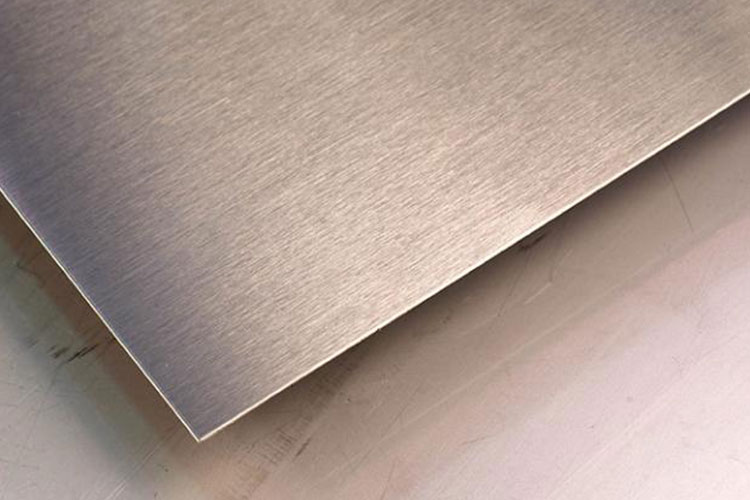
If you’ve ever received a drawing or material specification calling for a stainless steel No. 4 finish, you might have wondered what the finished surface should actually look like.
At first glance, it may seem like a simple brushed finish. But when you’re preparing stainless steel sheets or components for a customer, getting the surface appearance right matters. Even small differences in grain direction, texture, or shine can become noticeable when finished parts are placed side by side.
So, what exactly is a No. 4 finish, and how can you achieve consistent results?
In this guide, we’ll explain what No. 4 stainless steel looks like, how it’s produced, and where it’s commonly used. We’ll also share practical tips to help you understand finishing requirements and avoid common problems during production.
1. What Is a No. 4 Finish on Stainless Steel?
A No. 4 finish is a commonly used mechanical surface finish for stainless steel. Among the different stainless steel finishes available, No. 4 is a popular choice when a fine, directional texture and a soft metallic sheen are desired.
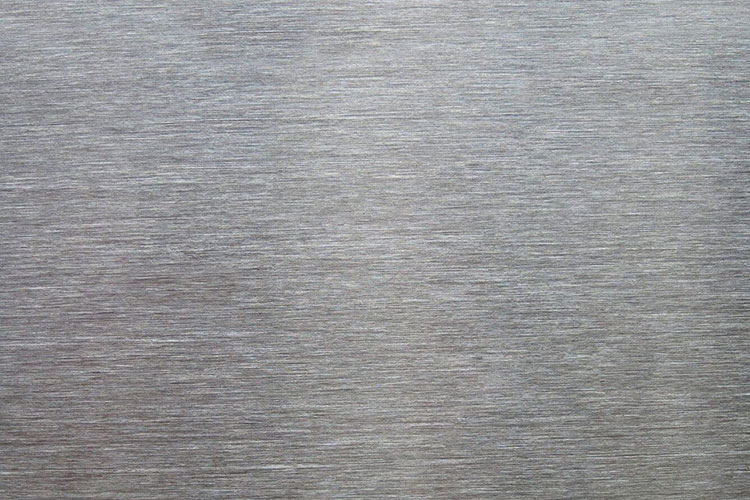
It features fine, directional lines and a soft, satin-like appearance rather than a highly reflective, mirror-like surface.
You may have seen this finish on kitchen equipment, elevator panels, architectural trim, or stainless steel cabinets. It offers a clean, professional look without being overly shiny.
Key Characteristics of a No. 4 Finish
- Fine directional grain:The surface has visible, generally uniform lines running in one direction.
- Soft metallic sheen:It reflects light gently without producing a clear mirror image.
- Practical appearance:Minor fingerprints and light surface marks may be less noticeable than on highly reflective finishes.
- Wide range of applications:Commonly used for decorative panels, appliances, and commercial equipment.
One thing worth remembering is that not every No. 4 finish looks exactly the same. The final texture and appearance can vary depending on the abrasives, processing conditions, and starting material.
If you’re working to a customer’s specification, an approved reference sample is often the simplest way to make sure everyone expects the same result.
2. What Does a No. 4 Stainless Steel Finish Look Like?
Imagine placing two stainless steel sheets side by side. Both are labeled “No. 4 Finish,” but one looks slightly brighter, while the other has more noticeable grain lines.
Does that mean one of them is wrong? Not necessarily.
Although No. 4 finishes share a similar appearance, the final result can vary depending on several factors.
What Affects the Final Appearance?
- Abrasive selection:Different abrasive types and grit sizes can produce finer or more noticeable grain patterns.
- Starting surface condition:Existing scratches or surface imperfections may affect the finished appearance.
- Processing conditions:Belt condition, pressure, and feed speed can influence surface consistency.
- Lighting and viewing angle:The same stainless steel sheet may appear brighter or darker under different lighting conditions.
Why Does This Matter for Your Project?
For a single component, a slight variation may not be noticeable. But when multiple stainless steel panels are installed next to each other, differences in grain direction or surface appearance can become much more obvious.
That’s why it’s worth confirming an approved finish sample before starting production, especially for decorative panels or projects requiring consistent results across multiple batches.
3. No. 4 vs Brushed, Satin and 2B Stainless Steel Finishes
If you’ve been comparing stainless steel finishes, you’ve probably come across terms like No. 4, brushed, satin, and 2B. They may sound similar, but they don’t always describe the same surface.
Understanding these differences can help you avoid ordering or producing a finish that doesn’t match your customer’s expectations.
Stainless Steel Finish Comparison
| Finish | Typical Appearance | Key Difference |
| No. 4 Finish | Fine, directional grain with a soft sheen | A recognized mechanical finishing designation |
| Brushed Finish | Visible lines running in one direction | A broad description of surface texture |
| Satin Finish | Soft, low-reflection appearance | A broad description of surface appearance |
| 2B Finish | Smooth, relatively dull surface | A mill finish produced through rolling and finishing processes |
Is No. 4 the Same as Brushed or Satin?
Not exactly. A No. 4 finish is often described as brushed or satin-like because of its fine grain and gentle sheen.
However, “brushed” and “satin” are broader terms that can refer to different surface textures. A surface that looks brushed isn’t automatically a No. 4 finish.
The 2B finish is different because it is produced during stainless steel mill processing rather than through the same mechanical finishing methods used for No. 4.
Our suggestion: If your customer specifies No. 4, don’t rely on appearance alone. Confirm the required finish specification and, whenever possible, agree on a physical reference sample before production.
4. How Is No. 4 Stainless Steel Finish Produced?
A No. 4 stainless steel finish is typically created through mechanical grinding and brushing. The goal is to produce a fine, consistent grain pattern without making the surface highly reflective.
The exact process depends on the starting material and the finish your customer expects.
Step 1: Prepare the Surface
Before finishing, check the stainless steel for scratches, dents, or other visible defects. Depending on the surface condition, an initial grinding step may be needed to remove unwanted marks.
Step 2: Create the Grain Pattern
Abrasive belts or suitable brushing tools are used to create fine lines in a consistent direction. The abrasive selection and processing conditions influence how the finished surface looks. For manufacturers processing stainless steel sheets in batches, a suitable metal brushing machine can help produce consistent directional grain patterns.
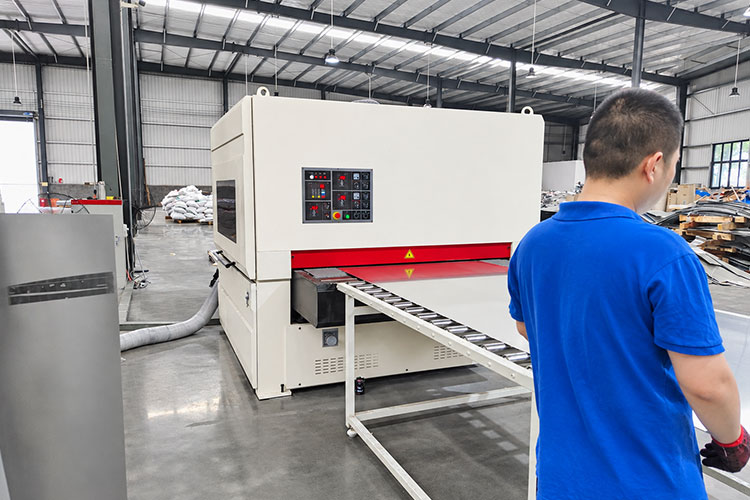
Step 3: Check the Finished Surface
After processing, inspect the grain direction, surface uniformity, and overall appearance. Comparing the result with an approved reference sample helps identify differences before the next production batch.
Why Does Process Consistency Matter?
Even with the right abrasives, changes in processing conditions can affect the final appearance.
For manufacturers handling multiple stainless steel sheets or components, keeping the finishing process consistent helps reduce visible differences between finished products.
5. Where Is No. 4 Stainless Steel Used?
No. 4 stainless steel is widely used in products that need a clean, attractive appearance without the strong reflections of a mirror finish.
Here are some common applications.
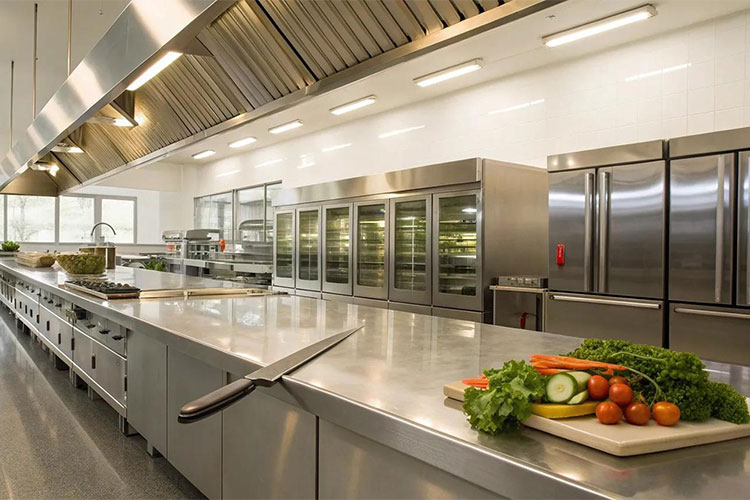
Commercial Kitchens and Food Equipment
No. 4 finishes are often found on stainless steel countertops, cabinets, sinks, and commercial kitchen equipment.
Their soft sheen creates a professional appearance, while the fine grain pattern can help make minor surface marks less noticeable during everyday use.
Architectural and Elevator Panels
From elevator interiors to wall panels and decorative trim, No. 4 stainless steel offers a modern look that works well in both commercial and public spaces.
For large installations, maintaining a consistent grain direction and surface appearance across adjacent panels is especially important.
Appliances and Furniture
No. 4 finishes are also used on appliance panels, metal furniture, shelving, and decorative components.
The subtle texture makes them a popular choice when manufacturers want a refined metallic appearance without excessive shine.
Industrial Equipment and Enclosures
Machine covers, control cabinets, and equipment panels may use No. 4 stainless steel when a uniform, professional-looking surface is required.
For manufacturers, the main consideration is often achieving the same finish across different components and production batches.
Choosing the Right Finish for Your Application
Before specifying No. 4, consider where the product will be installed, how frequently it will be touched, and what appearance your customer expects.
A reference sample can help you confirm that the selected finish is suitable before production begins.
6. Common Problems When Achieving a No. 4 Finish
Getting a No. 4 finish on one stainless steel sheet may seem straightforward. The real challenge often comes when you need the same appearance across dozens or hundreds of pieces.
Here are three common problems manufacturers may encounter.
Uneven Grain Patterns
If some areas look darker, brighter, or more heavily brushed than others, the surface may appear inconsistent.
This can happen when abrasive belts become worn, processing pressure varies, or the material moves unevenly through the machine.
What helps: Check abrasive condition, maintain stable processing settings, and inspect the surface regularly.
Visible Scratches or Surface Marks
Deep scratches from the original material may remain visible after finishing. Handling and transportation can also introduce new marks.
What helps: Inspect incoming materials, address deeper defects before final finishing, and protect finished surfaces during handling.
Differences Between Production Batches
Two batches processed with different abrasives or machine settings may not have exactly the same appearance, even when both are described as No. 4.
What helps: Keep an approved reference sample and record the processing conditions used to achieve it.
A Simple Way to Reduce Finishing Problems
Before starting a large production run, test the process on a sample piece and compare it with your customer’s requirements.
A little preparation can help reduce rework, material waste, and unexpected differences in the finished products.
7. Choosing Equipment for No. 4 Stainless Steel Finishing
If you’re producing stainless steel sheets or metal components in large quantities, achieving a consistent No. 4 finish is just as important as getting the appearance right.
The right finishing equipment can help reduce manual work and improve repeatability, but the best choice depends on your actual production needs.
What Should You Consider Before Choosing a Machine?
Before selecting equipment, it’s helpful to answer a few questions:
- Workpiece size:Are you processing large stainless steel sheets or smaller metal components?
- Starting surface:Does the material already have a relatively smooth surface, or does it need additional grinding?
- Desired finish:Do you have an approved No. 4 reference sample?
- Production volume:How many pieces do you need to process each day?
- Surface consistency:Do you need matching grain patterns across multiple parts or production batches?
Which Type of Machine Is Suitable?
Metal brushing and sheet metal graining machines can be used to create directional surface patterns on suitable stainless steel workpieces.
Depending on the starting material and finish requirements, additional grinding or finishing steps may be necessary.
The important thing is to match the machine configuration and abrasive process to your desired surface rather than assuming every brushing machine will produce the same result.
Need Help with Your Finishing Project?
At ARMPRE, we understand that different materials and production requirements call for different finishing solutions.
Share your stainless steel grade, workpiece dimensions, production needs, and desired finish with our team. We’ll help you explore a suitable equipment solution for your application.
Conclusion: Getting the Right No. 4 Stainless Steel Finish
A stainless steel No. 4 finish offers a clean, refined appearance that works well across many commercial and industrial applications.
But achieving the right finish involves more than choosing an abrasive. Understanding your customer’s expectations, checking the starting material, and maintaining consistent processing conditions all make a difference.
Whether you’re finishing a few stainless steel components or handling large production batches, an approved reference sample is a valuable starting point.
Need help with your stainless steel finishing project?
At ARMPRE, we provide metal brushing and surface finishing equipment for different production needs. Share your material, workpiece dimensions, and desired finish with our team, and we’ll help you explore a suitable solution.
Frequently Asked Questions (FAQ):
Q1: Is a No. 4 stainless steel finish the same as a 180-grit finish?
▼
Not necessarily. No. 4 finishes are often produced using abrasives in a similar grit range, but grit size alone doesn’t guarantee the final appearance. The starting material, abrasive type, and processing conditions also matter. If your project requires a specific finish, it’s best to confirm an approved sample
Q2: Can 304 and 316 stainless steel both have a No. 4 finish?
▼
Yes. Both 304 and 316 stainless steel can be processed to achieve a No. 4 finish. The material grade determines properties such as corrosion resistance, while the finishing process controls the surface appearance. Choose the grade based on your application and environment, then specify the required finish.
Q3: Is No. 4 stainless steel suitable for food processing equipment?
▼
It is commonly used for certain food processing and commercial kitchen equipment. However, a No. 4 finish alone doesn’t guarantee that a surface meets food-contact or hygiene requirements. The stainless steel grade, surface condition, cleanability, and applicable standards should also be considered.
Q4: Can a No. 4 finish be applied to an existing stainless steel sheet?
▼
In many cases, yes. An existing stainless steel sheet can be mechanically finished to create a No. 4 appearance. However, deep scratches, surface damage, or uneven starting conditions may require additional preparation. Testing a sample first helps determine whether the desired result is achievable
Q5: How can I confirm that a No. 4 finish meets my customer’s requirements?
▼
Start by checking the drawing or purchase specification for any referenced finish standard or additional surface requirements. If possible, agree on a physical reference sample with your customer. Comparing production samples under consistent lighting helps identify visible differences before full-scale manufacturing.
Ready to elevate your production quality?
Investing in a high-quality sanding machine is a decision that impacts your manufacturing precision and efficiency for the next 5 to 10 years. Don’t settle for instability. Choose a reliable partner to secure your competitive edge in surface finishing.