
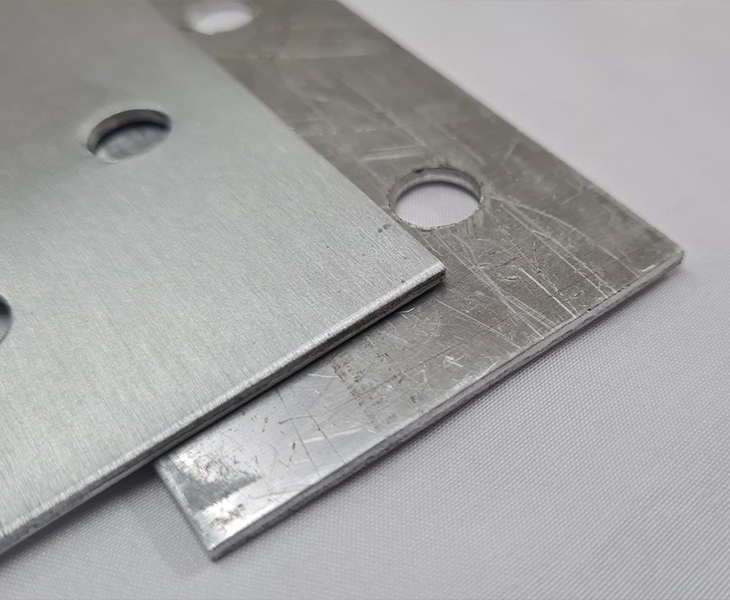
When specifying stainless steel surfaces, understanding the exact differences of hairline vs satin finish is critical for your project’s aesthetic and durability?
Put simply, you could have the perfect design, the best grade of stainless steel, and the latest innovations of a structural engineer may have gone into a project.
However, if the finish of a surface feels cold and inconsistent to the touch, or has every fingerprint on it, it dramatically detracts from an overall consideration of quality.
The subtle difference in a finish will directly affect a product’s ‘temperature’ and how it ‘works’. That is, the way something looks, feels, weathers and how it behaves with light will determine to large extent if a product is used ‘how’.
So, when specifying your final product, do you want the edgy hi-tech feel of a hairline finish? Or do you prefer the soft warm feel of a satin finish?
Here is the answer you are looking for.
- If you want a feel of modern technologies, a spatial extension, a linear streamlined modern design, then the hairline finish is proper choice. The long continuous straight lines (parallel to each other) across the metal allows your eye (looking up) to follow the lines up and to extend upward thus visually creating a height and directionality for the viewer.
- If a heat/fingerprint resisting surface, a warm feel and a diffused reflection of light are characteristics you want, then you should use a satin finish. The ‘random’ small micro textures scatter the light and create a halo reflection which is uniformly diffuse and makes you feel you are touching something special.
Now that we have defined the results of both finishes we’ll show each uniqueness and detail a ‘technique’ of producing each ‘product’ to a very high quality every time.
1.Aesthetic Identity: Hairline vs Satin Finish Defined
First, let’s clear up a common misconception, with a very brief description of what each is and an intimate relation of one from the other.
Although hairline finishes (also called V-line finishes) and satin finish are both high-end fine premium finishes produced on the same high grades of metal, the two processes differ widely and their results (the way they look) are even wider apart.
The hairline finish is a single pass of continuous long straight lines running the entire length of the surface of the metal in a parallel manner. ‘Hair’ is brushed in the same continuous motion thus leaving a strong linear reflection of light from that finished surface; that is, when the light is reflected from the surface the reflection is linear (to the hairline finish) cleaning it to feel very clean, modern.
A satin finish will ‘typically’ have the appearance of Scotch-Brite™ (note; this ‘finish’ can take on many variations).
A satin ‘finish’ consists of many fine, irregular and/or very short micro textures; instead of being tied to a visible continuous line, being fine/randomly defined, takes on a fine, random, ‘overlapping’ circle scratch pattern (see also recycled) will scatter the light evenly to create a see-through, diffuse, uniform look from any side.
There is no ‘grain’ that one can see from a distance, but it appears smooth or dull or expensive. The subtle differences of the two finishes are useful in knowing when specifying the finishes, a case of specifying the improper finish will present undesirable maintenance and/or aesthetic results in your finished project.
| Finish Type | Visual Reflection & Language | Tactile Sensation / Experience |
|---|---|---|
| Hairline Finish (HL) | Linear, sharp, and directional. Long continuous straight lines run the entire length, creating a sleek, high-tech, and modern architectural extension. | Infinitely fine and smooth when touched along the grain. A slight, crisp micro-texture can be felt when running a hand against the grain. |
| Satin Finish | Omnidirectional and diffused. Irregular, overlapping micro-textures scatter light evenly to create a soft, low-glare halo effect with less “manufactured” look. | Infinitely warmer and silkier to the touch. Highly inviting for hand contact and exceptionally forgiving against blemishes. |
2.The Aesthetic
- The ‘Visual Identity’
When specifying any surface ‘pattern’ finish for any project/client, you are specifying a visual language. Here’s your guide to interpreting the aesthetics of each finish.
Hairline Finish (HL)
Sensation/Experience: A hairline is based on directionality, the way the texture parallels your hair. Hairline finishes are infinitely fine in the textural sense and duplicate closely how your hair appears when smooth/combed.
The reflective quality (that is light reflecting back) is linear. When you touch the finish in the same direction as the ‘grain’, your hand feel very smooth (or sounds smooth).
If you try touching the hairline against the grain with your hand you will feel very slightly some slight irregularity. This finish suggests a very distinctly up to date / technical.
They also provide a very clean sense of precision, making the hairline finishes an extremely good choice for creating a clean organized space in an interior design/architecture project. The hairline finish also provides a very clean crisp appearance which draws attention to the detail without being overbearing.
Satin (Soft Aesthetic)
Sensation/Experience: By it’s very definition a satin is diffused / soft. The satin finish will diffuse the light reflecting off (that is, from the surface, from where it gets its name; e.g. satin finish).
While the feel of the satin finish is infinitely warmer (than a traditional brush finish) there are no defined, long straight line of light to reflect off of as you touch the surface of a satin finish.
A satin finish has the same visual quality no matter which direction you look at the panel. So it gives an appearance that’s more natural and therefore less ‘manufactured’ than the hairline finish.
Another truly fine feature of satin finishes is they allow your hand to touch them.
- Technical Specifications
For you engineers and purchasing professionals we will examine the core information. This is necessary for greatly understanding the technical differences between your satin and your hairline finishes from what type of equipment to use to produce them and what abrasives to use.
| Technical Feature | Hairline Finish (HL) | Satin Finish |
|---|---|---|
| Process of Creating | Dedicated continuous filament abrasive rollers or precision sanders | Non-woven nylon abrasives (e.g., Scotch-Brite™) and fine mesh matrix |
| Texture Length & Pattern | Continuous long-line, strictly parallel pattern | Irregular, short micro-textures / overlapping patterns |
| Roughness Average (Ra) | 0.2 – 0.6 μm | 0.3 – 0.8 μm |
| Light Reflection Type | Linear Reflectance (accents height/depth) | Omnidirectional Diffuse (scatters micro-blemishes) |
| Fingerprint & Smudge Resistance | Moderate (highlights prints at a greater rate) | High Performance (best at hiding marks/spots) |
So what’s this mean to you? The Ra Value (Roughness Average), the average overall smoothness present in the finish, and assure you both are quite smooth finishes.
The hairline finish is typically a bit smoother (because of the precision in the specifications of the sanding belt!) Overall then, how much smoother will depend heavily on the abrasives used, and how fine they are, as there may be occasions when the satin finish is actually now smoother than hairline finish.
HOW you are reflecting is what distinguish the satin and hairline finishes, chide, the hairline finish is a linear reflectance of light; (i.e.s). the satin finish produces ONLY diffuse reflections, which naturally skews small blemishes away from the eye of the observer.
- Where Do We Use Them
While now we understood some theory of the finishes, lets apply the knowledge you now have! Here is a guide that will help you use these two understandable textures for the next project you allow yourself to reflect upon:
Hairline Finishes are in such places as:
- Elevator Cars and Doors:The hairline finish is the traditional finish for elevator cars, the vertical lines will accentuate even a greater illusion of the height of the elevator car. When one is standing inside of an elevator featuring hairline finished walls, the vertical hairline lines of the walls will provide the individual with an up standpoint perception of added height; of which produces a high-end finish reputation in the elevator industry.
- Building Facades:When used in large panel applications, hairline finishes produce a very strong feeling of unity. A skyscraper or modern office building will appear to be sleek and elegant if the panel finishes used exclusively feature hairline finishes. When combined with the controlled linear light reflections, the architecture of the building(s)’ facade will produce a clean, sophisticated architectural and dramatic background for the light of the sky or the reflection of the other buildings adjacent to the building.
- High-end Appliances:For the modern, high-end tech savvy look, hairline finishes on high-end appliance panels provide the clean crisp look; however hairline finishes can also highlight fingerprints at a much greater rate than satin finishes.
Satin Finishes are in such places as:
- High-End Kitchen and Bathroom Fixtures:The benefits of a satin finish in the kitchen or bathroom are many! Satin finishes are the best available finish types at hiding fingerprints, as well as all other type of markings. Kitchens and bathrooms are probably the two areas most prone to being touched repeatedly by the human hand, such as faucet, cabinet, appliance, etc. By having satin finishes, the multitude of random micro texture creates a diffused light appearance; therefore providing a natural appearing, smooth and clean surface. One of the prime benefits to satin finishes, is that they yield a much cleaner finish at the end of the day than any other type finish.
- Medical and Pharmaceutical Industries:Two areas where cleanliness and hygiene consideration of the manufacturing involved in the products are where companies place a premium on product cleanliness, are in the medical and pharmaceutical industries. By using a satin finish on their products, those industries are able to minimize the chance for bacteria to adhere to the product, provided the satin finish is applied properly. Cleaning the surface finished in satin should be a total breeze due to the lack of directional micro-grain patterns.
- Consumer Electronics:Also there are many electronic products (notebooks, cellular phones, audio equipment) that exceed customers’ expectations for appearance and feel. Customers feel like they are using a premium product by using a satin finished electronic product other than looking good, helps to keep the product looking a high quality product with very little maintenance due to resistance to fingerprints from being handled often.
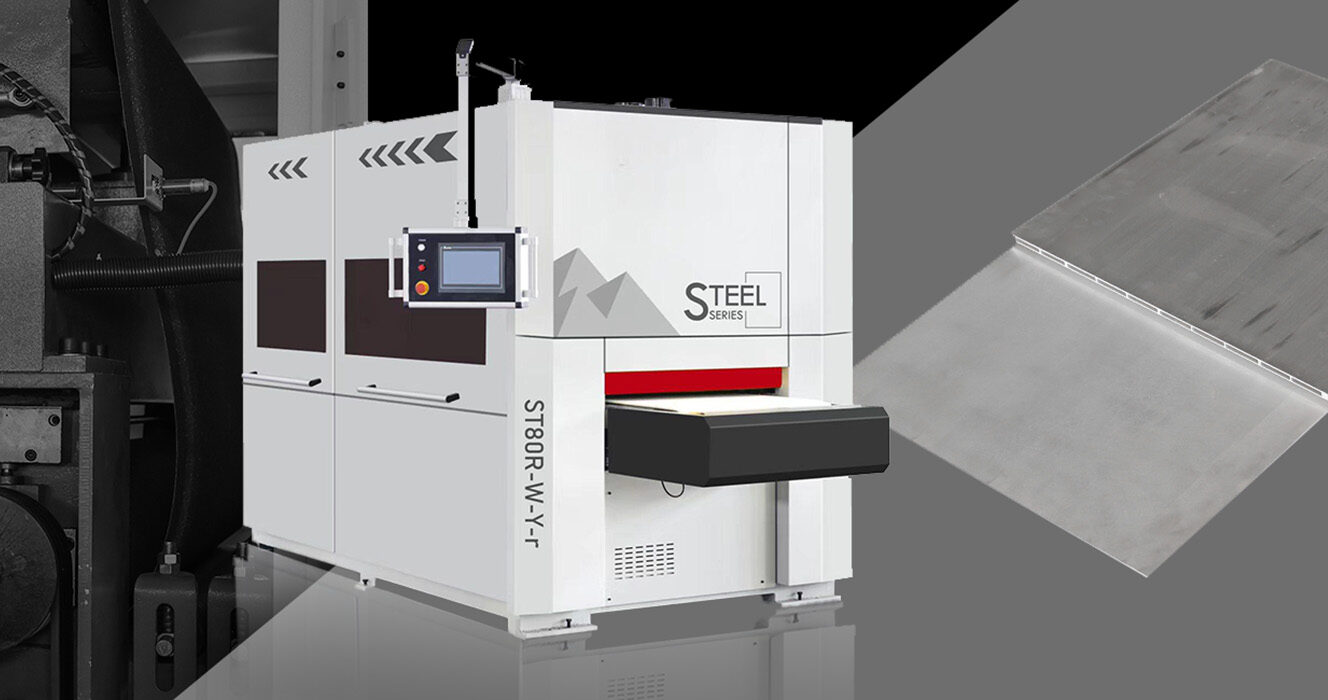
Armpre sheet metal finishing equipment leveraging digital pressure compensation system to prevent light and dark patches.
3.Dealing with the Challenges by Armpre Machines for Producing Consistent Finishes
The inability to produce desired finishes consistently when using machines besides Armpre comes down to a few challenges when processing (manual operations, machines with limitations).
These machines lend themselves to inconsistency when finishing the workpiece surface, producing dark and light patches in the same panel, and inconsistent grain patterns. It also lends to the potential of having create visible start and stop marks in the finished surface.
Consistent Finishes
Inconsistencies in finish appearance or texture are unacceptable when producing either a continuous hairline or a uniform satin finish. Even tiny variations in pressure applied to the surface of the metal sheets themselves may dramatically affect the final appearance and reflectivity of satin finishes as well as the overall look of the finished product.
This Armpre machine incorporates a digital compensation system that provides equal (and constant) pressure to every area of the sheet when grinding the metal sheets. Moreover, the digital pressure compensation system will continue to constantly adjust the amount of pressure applied to the sheets during the application of the grind process; because of these factors, the resulting satin finish will appear to have been produced using a single piece of metal system rather than from multiple pieces of metal joined together.
Edge Rounding Synchronization On Large Panels
The issue with large workpieces finished in either a brush or satin finish is the sharp corners created as part of the process of producing the satin finish. The sharp corners of large workpieces serve two potential issues with; first, it provides an opportunity for the coating to chip off the workpiece during coating application/installation And second, it poses a potential hazard for the end user with a sharp edge on installation and/or use of the finished product.
This Armpre machine incorporates an edge rounding synchronization feature. This serves to aid with the rounding of edges on finished workpieces but also produces a nice satin finish at the same time.
In the end, all of the workpieces produced procedure will not have any sharp edges to facilitate better adhesion to the surface finish of machine workpieces lead to both efficiency and safety for the end user.
Conclusion:
The quality of the finish produced on the workpiece(s) processed on your metal finishing line(s) is a direct reflection on your company’s reputation.
You will need to be partnering with a knowledgeable, reputable metal finish supplier possessing a degree of finesse with a working understanding of the scientific principles governing all things surface treatment and correct related problem solving skill sets.
The digital surface treatment fabrication machine from Armpre provides both metal finisher with a great efficiency and the customer(s) with high finish level metal finishes on metals workpieces, produced consistently across the workpieces. Visit our website www.armpre.com & we provide digital metal finishing equipment with very high returns on investment.
📉 Recommended by Engineers
Don’t know which one to choose yet? Discover the precision engineering behind ARMPRE equipment, the premium alternative to timesaver machines and fladder sanders.
👉 Explore Now: High-Precision Wide Belt Sanders for Industrial Finishing at armpre.com
FAQ
Q1: Are satin and hairline the same?
▼
No, they are not. In their simplicity, both satin & hairline finishes are achieved with long continuous parallel lines, creating a very noticeable directional reflection. On the other hand, satin (or satin-like) finishes (usually produced with scotch brite) are made up of many very fine; very short filaments (cutting abrasive material) which unevenly disperse to create an omnidirectionally diffused halo effect.
Q2: Does hairline/satin surface roughness you?
▼
Both hairline & satin finishes have very fine high-quality surface roughness generally; satin finishes are generally 0.3-0.8µm surface roughness, hairline 0.2-0.6µm surface roughness.
Q3: What is more resistant to fingerprints and everyday usage?
▼
Fingerprints & everyday scratches/abuse usually do not affect satin finishes as much. Due to their omni-directional diffused microtexture; satin finishes usually hide marks better then brushed finishes; therefore, satin finishes are more suitable for high-end heavy-duty hardware used on quality kitchen & bath products.
Q4: What makes a hairline finish a luxury finish for elevator cars?
▼
Hairline finishes have long continuous headlights with their strong non-directional characteristics create a “depth” of light perceived to make the elevator cars seem taller then others in their category.
Q5: What type of materials are used to create a high-quality satin finish?
▼
Standard brushed finishes create a finish using abrasive belt materials to create an extremely fine silk-like surface quality or by non-woven nylon abrasives with very fine rounded bases material to produce,hairline vs satin finish. Both create smooth finishes
Q6: How do you get bright/dull variances on sheet metal?
▼
The presence of different size particles on the surface of the steel from surface finishing/finishing process result in imperfections in surface treatment/finishing; both bright/dull type due to presence or absence of proper digital pressure compensating systems during finishing process. The new armpre digital metal surface treatment system is designed to mitigate these inconsistencies by providing exact digital pressure compensation throughout the entire finishing system via all finishing stations
Q7: Is there any compatible system that can take/accept the advanced treatments on medical/pharmaceutical devices?
▼
Absolutely! While we recommend high-quality satin finishes for use with medical/pharmaceutical devices, hairline vs satin finish,the extremely low surface roughness found on satin finishes will result in a significant decrease in the number of microscopic areas for bacteria to attach; thus making cleaning & sanitizing easier.
Q8: Why does armpre equipment produce rounded edges when finishing?
▼
Mechanical finishing of large panels (elevator doors, large refrigerator panels, etc.) Through the brushed/satin processes creates small sharp burrs on the edges of the panels. Therefore, by synronizing the edging process with the finishing – both operations are completed simultaneously; thus provide a smooth edge for the user’s use after finishing. Therefore, the paint will not stick to burrs making the finished edges of the panels feel perfect when the user uses the edges of the panels finished with either paint or powder coating.
Ready to elevate your production quality?
Investing in a high-quality sanding machine is a decision that impacts your manufacturing precision and efficiency for the next 5 to 10 years. Don’t settle for instability. Choose a reliable partner to secure your competitive edge in surface finishing.
About Smaria
I am a technical specialist at ARMPRE, dedicated to mastering the art of industrial surface finishing. I focus on bridging the gap between sophisticated automation and real-world manufacturing, ensuring every workpiece achieves consistent edge perfection and a flawless finish that maximizes your long-term ROI.